Skip to content
Industrial piping systems require insulation that withstands extreme thermal stress while ensuring personnel safety. Sourcing the right rock wool pipe insulation goes beyond basic heat retention; engineers must select materials capable of operating continuously at temperatures up to 780°C without structural failure. Choosing the correct specification prevents energy loss and protects steel infrastructure from corrosion under insulation (CUI) in harsh environments.
At China Thermal Insulation, we provide engineered rock wool insulation solutions that meet stringent acoustic and fire-safety standards—explore our full range at https://chinathermalinsulation.com/ to support your next commercial or industrial project.
What Is Rock Wool Pipe Insulation?
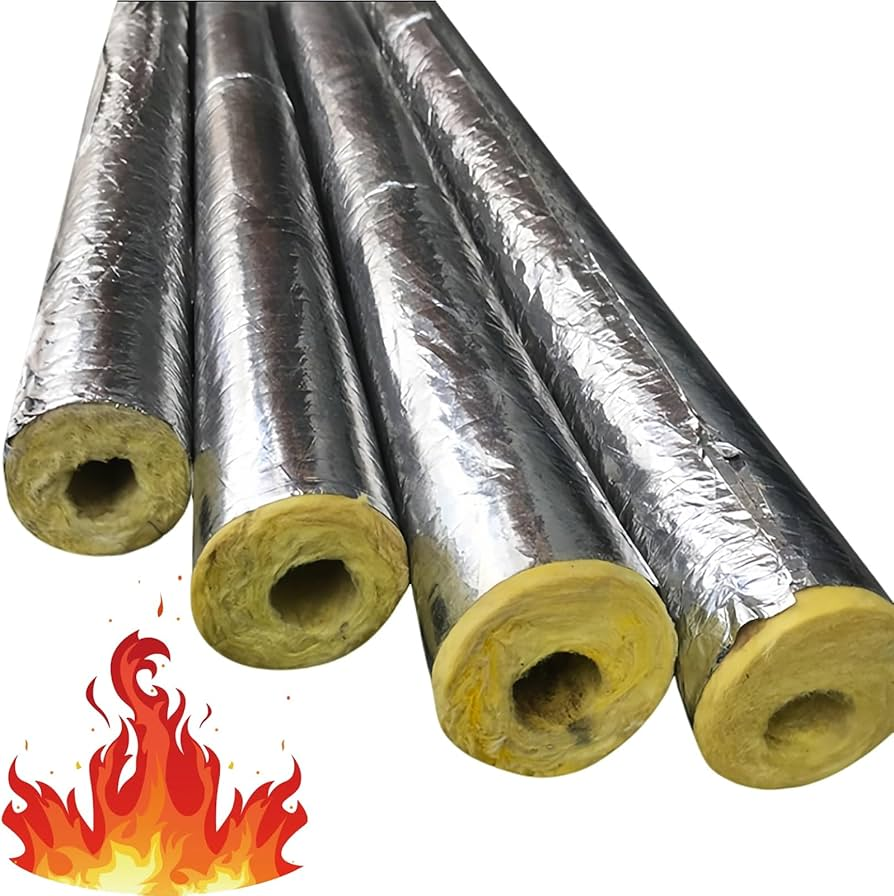
Rock wool pipe insulation is a preformed, non-combustible cylindrical section made from long rock fibers and high-performance binders. It is engineered for piping systems operating at temperatures up to 780°C, providing thermal efficiency, fire protection, and acoustic damping while meeting strict standards like ASTM C547 and BS 5422.
Composition and High-Temperature Capabilities
Rock wool pipe insulation consists of long, non-combustible rock fibers bonded with a high-performance agent to ensure mechanical stability. Manufacturers design these sections for continuous operation on high-heat steam and process lines, supporting temperature ratings up to 780°C. This robust composition guarantees structural integrity without melting or degrading, even in rigorous industrial environments.
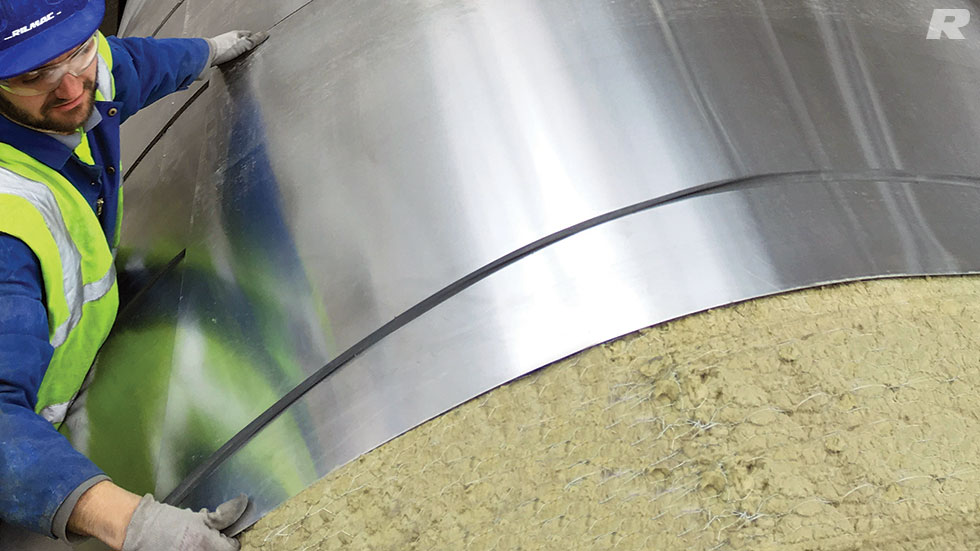
The product features a split and hinged cylindrical structure that allows for rapid snap-on installation without the need for extensive field cutting. This preformed design expedites application on long pipe runs. In addition to thermal management, the high-density fiber matrix provides acoustic noise reduction and passive fire protection, securing industrial infrastructure against multiple operational risks simultaneously.
Key Performance Benefits of Rock Wool Pipe Insulation
Rock wool pipe insulation offers exceptional thermal control across a 0–250°C range and achieves Euroclass A2L-s1,d0 fire ratings for up to 120 minutes of resistance. Its non-combustible stone wool core ensures a service life exceeding 50 years without thermal aging, providing stable performance for industrial piping systems.
| Performance Metric | Technical Specification | Operational Benefit |
|---|---|---|
| Operating Temperature | 0°C to 250°C | Supports diverse heating, steam, and process lines. |
| Fire Classification | Euroclass A2L-s1,d0 | Non-combustible core limits smoke and prevents flame spread. |
| Fire Resistance | Up to 120 Minutes | Maintains integrity for penetration seals (EN 1366-3). |
| Service Life | > 50 Years | Zero thermal aging ensures consistent R-values over time. |
| Nominal Density | Min. 120 kg/m³ | Provides structural stability and impact resistance. |
Superior Thermal Efficiency and Fire Safety Ratings
Rock wool pipe insulation delivers reliable heat retention across a standard operating temperature range of 0°C to 250°C, making it adaptable for diverse industrial applications. This thermal control directly impacts energy consumption, particularly when using aluminium-faced sections. The low emissivity of the aluminium facing reduces radiant heat loss by approximately 9% compared to standard PVC-faced or painted options, providing measurable efficiency gains for hot piping systems.
Long-Term Durability and Moisture Control Standards
The physical structure of rock wool ensures longevity that matches the life of the mechanical system. With a minimum nominal density of 120 kg/m³, the material resists compression and impact damage, maintaining its shape and insulating properties for over 50 years. Unlike some foam-based alternatives, rock wool does not experience thermal aging, meaning the R-value specified at installation remains constant throughout the product’s lifespan.
Moisture management remains a priority for preventing corrosion under insulation (CUI). Rock wool fibers are naturally water-repellent, and when installed with sealed foil tape at joints, the system effectively prevents moisture ingress. Engineers calculate the necessary thickness to control condensation based on BS 5422:2009 and BS EN ISO 12241 standards. These calculations ensure the outer surface temperature stays above the dew point, protecting both the insulation and the underlying steel pipe from water damage.
Rock Wool vs. Other Industrial Insulation Materials
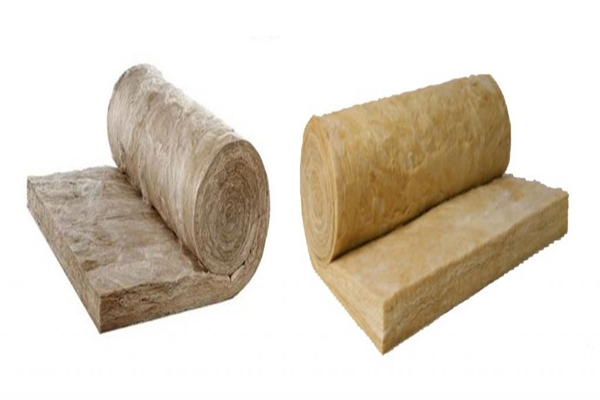
Rock wool outperforms fiberglass and polyisocyanurate in high-temperature industrial applications, sustaining continuous heat up to 1200°F compared to Polyiso’s 250°F limit. While fiberglass costs less for moderate temperatures, rock wool offers superior non-combustibility (ASTM E136) and load-bearing compressive strength needed for heavy piping systems.
Performance Comparison: Rock Wool vs. Fiberglass and Polyiso
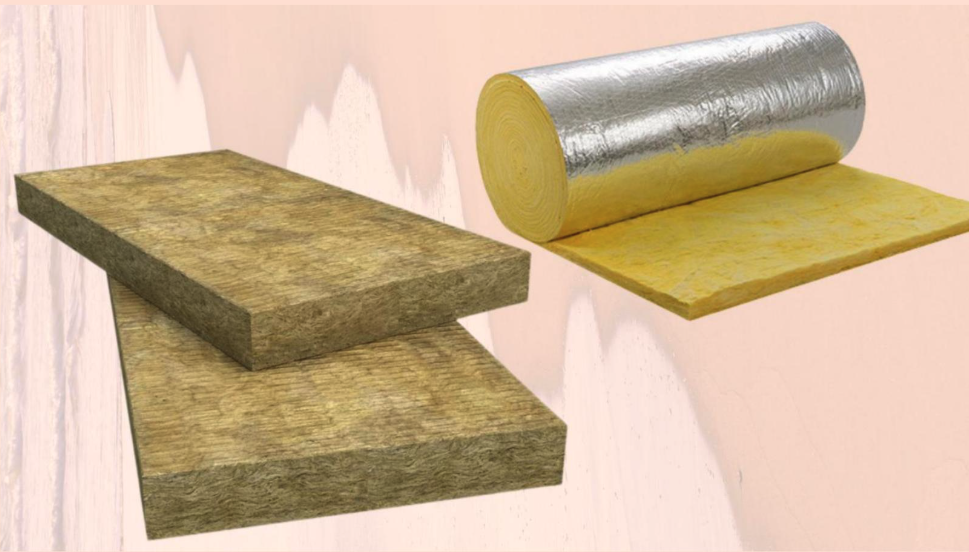
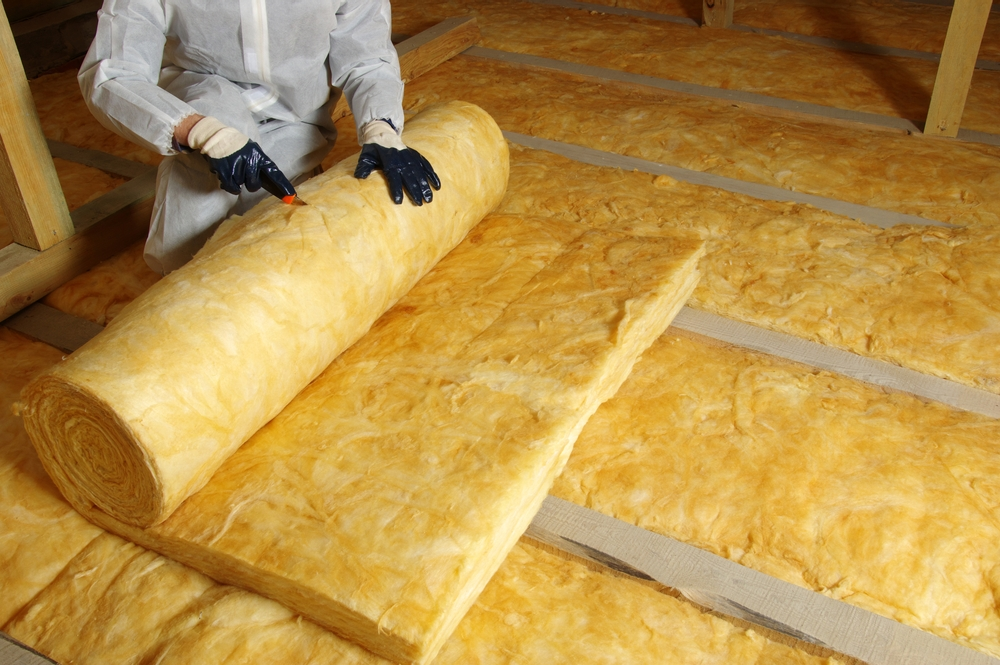
Selecting the correct insulation material requires balancing thermal efficiency with physical durability. Fiberglass operates effectively in moderate temperature ranges and offers a lower material cost, but it lacks the density required for heavy industrial impact resistance. In environments where piping systems face mechanical abuse or vibration, fiberglass can compress, reducing its insulating capacity over time.
Polyisocyanurate (Polyiso) provides excellent R-values per inch, making it space-efficient for cold systems. However, its organic foam structure degrades rapidly above 250°F, making it unsuitable for steam piping or high-heat process lines. In contrast, rock wool maintains its structure and R-value without settling or degrading. Its inorganic basalt and slag composition also resists Corrosion Under Insulation (CUI) more effectively than organic foam alternatives, which can trap acidic moisture against the pipe.
Temperature Ratings, Fire Resistance, and Safety Requirements
Rock wool pipe insulation typically operates effectively between -40°C and 650°C, with advanced grades handling up to 750°C. It is inherently non-combustible, achieving Euroclass A1 or A2 ratings and maintaining fire resistance for 2–4 hours in tested assemblies. For safety, products meet strict standards like ASTM E84 for surface burning and limit leachable chlorides to prevent corrosion under insulation (CUI) on steel pipes.
Maximum Operating Temperatures and Thermal Stability
Standard industrial mineral wool pipe insulation is engineered to perform across a broad thermal spectrum, typically extending from -40°C to +650°C. While generic products handle these standard ranges, high-performance variants—such as those from Isoking or RockTech—are capable of withstanding maximum hot-face temperatures up to 750°C. Despite these upper limits, manufacturers generally recommend a continuous service cap of 650°C. Adhering to this limit ensures the binder system remains intact, preserving the dimensional stability of the pipe section and preventing structural degradation over the facility’s lifespan.
Thermal performance fluctuates significantly as operating temperatures rise. At moderate processing temperatures of 50°C, the thermal conductivity is approximately 0.036 W/m·K. However, in high-heat applications reaching 400°C, this value increases to roughly 0.088 W/m·K. Engineers must account for this non-linear shift when calculating insulation thickness to ensure surface temperatures remain safe and heat loss stays within specified tolerances.
Fire Performance Standards and Corrosion Safety
Rock wool is inherently non-combustible, achieving the highest fire classification ratings of Euroclass A1 or A2 under EN 13501-1 standards. In North American testing per ASTM E84, the material typically registers a Flame Spread Index of 0 and a Smoke Developed Index of ≤25. When integrated into fire-rated assemblies, such as penetration seals tested to ASTM E119 or EN 1363, rock wool pipe sections provide between 2 to 4 hours of fire resistance, offering critical protection for structural integrity during emergency events.
Beyond fire safety, chemical stability is vital for protecting the underlying piping infrastructure. To mitigate the risk of Corrosion Under Insulation (CUI), particularly on austenitic stainless steel, rock wool insulation is manufactured with strictly controlled low water-leachable chloride limits in accordance with ASTM C612 and ASTM C795. Additionally, the material is treated to be hydrophobic, maintaining less than 1% moisture absorption by weight, which prevents water accumulation at the pipe interface and further reduces corrosion potential.
How to Evaluate and Select a Reliable B2B Supplier
Select suppliers that explicitly certify products to ASTM C547 (preformed pipe) and ASTM C585 (dimensional tolerances), ensuring they offer true structural pipe sections rather than rolled blankets. A reliable partner will provide thickness tables aligned with BS 5422:2023 for heat loss calculations, verify densities in the 80–120 kg/m³ range, and offer documented water repellency testing to prevent corrosion under insulation (CUI).
Screening for International Standards Alignment (ASTM C547 & EN 14303)
The first step in vetting a manufacturer is distinguishing between genuine preformed pipe sections and general-purpose mineral wool adapted for piping. Reputable suppliers certify their pipe sections to ASTM C547 or EN 14303, which govern the performance of mineral fiber pipe insulation. Suppliers lacking these specific certifications may be offering rolled blanket material (governed by ASTM C553), which lacks the compressive strength required to support metal cladding or withstand mechanical abuse in industrial environments.
Dimensional precision is equally critical for installation efficiency. You must verify adherence to ASTM C585, the standard that dictates Inner Diameter (ID) and Outer Diameter (OD) tolerances. Compliance ensures that the split sections snap firmly around standard steel or copper pipes without gaps that leak heat. Additionally, manufacturers holding multi-market certifications, such as GB 11835 or JIS A 9504 alongside Western standards, often demonstrate the production consistency and quality control systems necessary for global export markets.
When Rock Wool Pipe Insulation Is the Best Choice
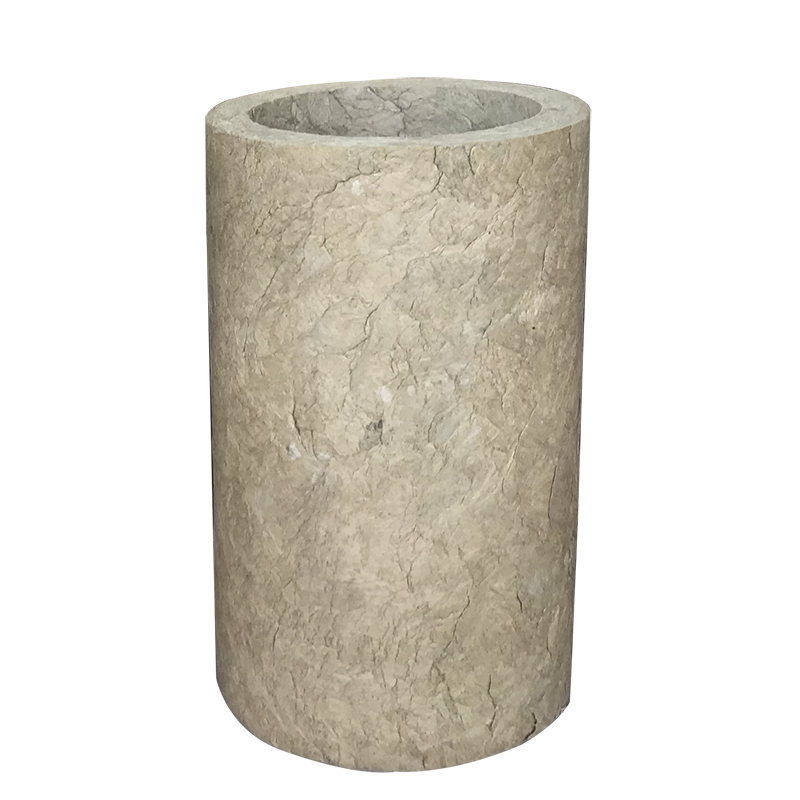
Rock wool is the optimal selection for industrial systems operating between 120°F and 1200°F, such as steam lines and boiler stacks. It is specifically required in fire-risk zones due to its non-combustible nature and is preferred for mitigating Corrosion Under Insulation (CUI) on carbon steel pipes in humid environments.
High-Temperature Stability and Fire Safety Compliance
Engineers specify rock wool pipe insulation primarily for systems operating within the 120°F to 1200°F thermal range. This capacity makes it the standard for high-pressure steam lines, process piping, and boiler stacks where organic foam insulations would degrade or melt. The material maintains its thermal resistance (R-value) even during rapid heat fluctuations, ensuring consistent process control and personnel protection in high-heat industrial sectors like power generation and petrochemical refining.
Beyond thermal control, rock wool is mandatory in fire-critical zones. As a non-combustible material typically rated Euroclass A1 or A2 and compliant with ASTM E136, it acts as a passive fire barrier. Unlike plastic-based foams that may generate smoke or fuel combustion, rock wool fibers resist temperatures exceeding 2,000°F without melting. This structural integrity prevents the collapse of insulation systems during fire events, protecting the underlying pipework and buying critical time for emergency response.
Mitigating Corrosion (CUI) and Mechanical Stress
Corrosion Under Insulation (CUI) poses a severe threat to carbon steel piping, particularly grades A53 or A106 used in humid processing environments. Rock wool addresses this through its hydrophobic engineering; the fibers are treated to repel liquid water while allowing water vapor to escape. This breathability prevents moisture from becoming trapped against the pipe surface, significantly reducing the electrolyte formation that drives corrosion cycles on steel substrates.
Mechanical durability further distinguishes rock wool from lighter alternatives like fiberglass. With a density roughly three times that of standard glass fiber insulation (often exceeding 100 kg/m³), rock wool resists compression from foot traffic and mechanical abuse common in maintenance-heavy facilities. This density also provides acoustic benefits, effectively dampening vibration and noise transmission in high-velocity flow systems, which adds a layer of safety and comfort to the industrial work environment.
Expert Rock Wool Manufacturing for Global Projects
Final Thoughts
Selecting rock wool pipe insulation secures industrial infrastructure against extreme thermal stress and fire hazards. Its capacity to withstand continuous operating temperatures of 650°C, coupled with a non-combustible stone core, provides a safety margin that organic foams cannot match. For facilities managing steam lines or high-heat process piping, this material delivers the necessary mechanical stability and acoustic damping to maintain safe, efficient operations over a 50-year service life.
At China Thermal Insulation, we manufacture and supply high-performance rock wool pipe insulation engineered for demanding industrial systems—learn more at https://chinathermalinsulation.com/.
Long-term reliability depends on specifying the correct technical parameters during procurement. Prioritizing low leachable chlorides and verified water repellency protects steel assets from Corrosion Under Insulation (CUI), significantly lowering maintenance costs. Engineers who align insulation density and thickness with strict standards like ASTM C547 and BS 5422 ensure their systems not only meet current safety codes but also resist the wear of demanding industrial environments.
Frequently Asked Questions
What is the maximum continuous service temperature for rock wool pipe insulation?
Standard high-temperature rock wool pipe sections are generally rated for continuous service up to **650–680°C** (approx. 1200°F). Products should meet standards like **EN 14707** or **ASTM C547** to ensure they maintain structural integrity and thermal performance at these limits.
How often should I inspect the insulation for Corrosion Under Insulation (CUI)?
For piping systems susceptible to CUI, best practices and pressure codes (such as API 570) recommend removing insulation for visual inspection **at least every 5 years**. This interval may be adjusted based on risk-based inspection (RBI) assessments, but 5 years is the standard maximum planning interval.
Which vapor retarder is best for below-ambient or chilled water applications?
Use a **Class I vapor retarder** with a permeance rating of **≤0.02 perms**, typically a factory-applied polymer/aluminum laminate. This barrier prevents moisture ingress and condensation, which is critical for maintaining the thermal efficiency of rock wool in cooling systems.
How can I verify if rock wool is safe for use on austenitic stainless steel?
The insulation must be certified as complying with **ASTM C795**. This standard requires passing the **ASTM C871** chemical analysis for leachable chlorides and proving that no stress-corrosion cracking occurs on stainless steel test coupons under specific test conditions.
What density prevents insulation sag in vertical pipe runs?
To ensure dimensional stability and prevent sagging in vertical installations, specify rock wool pipe sections with a nominal density between **100 kg/m³ and 125 kg/m³**. The upper end of this range is preferred for larger diameters or systems with heavy metal jacketing.