La selección del aislamiento adecuado para envolventes comerciales y equipos industriales a menudo se reduce a la resistencia al fuego y la estabilidad estructural.. El aislamiento de lana de roca se distingue de las alternativas más ligeras al soportar temperaturas de funcionamiento superiores a 1260 °C y al mismo tiempo mantener la rigidez dimensional bajo cargas pesadas de revestimiento..
Esta guía cubre las especificaciones esenciales para integrar lana de roca en HVAC., ensamblajes de pared, y equipos de proceso. Evaluamos métricas críticas de desempeño, incluidos rangos de densidad de 40 a 150 kg/m³ y cumplimiento de las clasificaciones de no combustible Euroclase A1, para ayudarle a seleccionar el material correcto para aplicaciones acústicas y de carga.
Lana de Roca vs.. Lana de roca: Diferencias técnicas
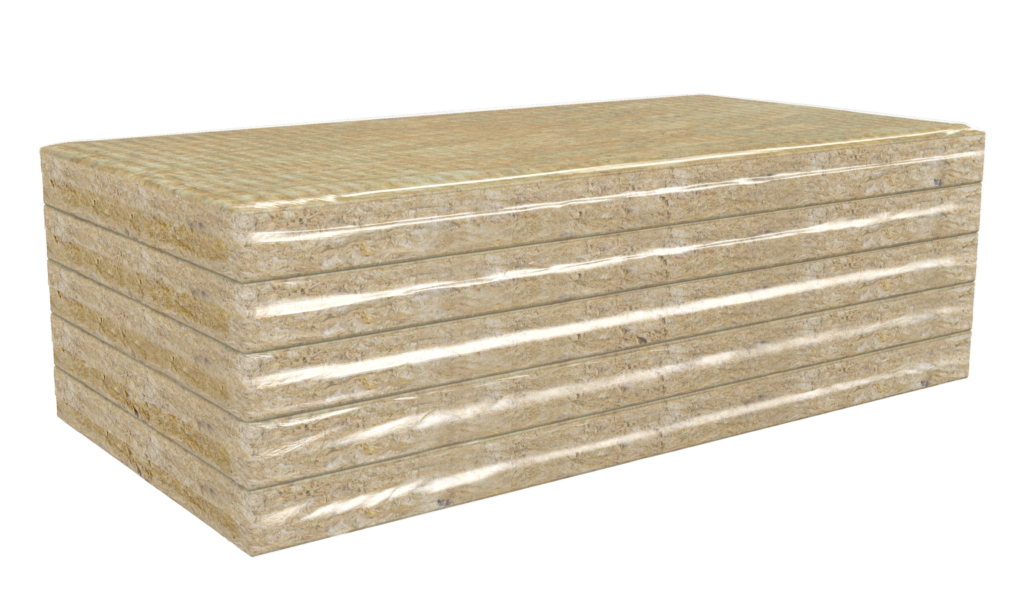
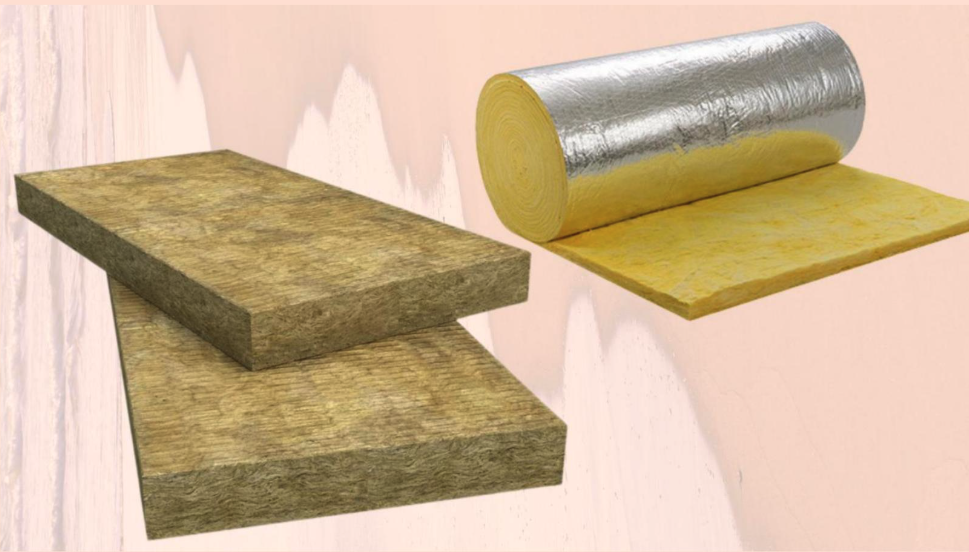
Técnicamente, ‘lana de roca‘ y ‘lana de roca’ son sinónimos que describen el aislamiento hecho principalmente de basalto o roca ígnea. La diferencia sustancial en la industria es entre la verdadera lana de roca (roca natural) y lana de escoria (escoria de alto horno). Ambos son materiales de alta densidad. (40–150 kg/m³) con puntos de fusión superiores a 1260°C, Ofrece resistencia al fuego y resistencia a la compresión superiores en comparación con la lana de vidrio estándar..
Terminología y composición: Basalto vs.. Escoria
En normas técnicas, “lana de roca” y “lana de roca” funcionan como términos intercambiables para lana mineral producida a partir de roca ígnea natural, como el basalto y la diabasa. La principal diferencia en la producción radica en la lana de roca pura., que es a base de basalto, y lana de escoria, que utiliza escoria de alto horno de hierro o cobre como materia prima principal.
Los organismos industriales como NAIMA y ASTM clasifican estos materiales bajo el concepto más amplio. “lana de roca y escoria” definición, reconociendo sus similitudes en la estructura fibrosa. Sin embargo, Las formulaciones específicas influyen en el color del producto final y en la resistencia de la fibra., distinguir los productos de roca ígnea pura de aquellos que dependen en gran medida de subproductos de escoria metalúrgica.
Densidad, Conductividad térmica, y comportamiento frente al fuego
La lana de roca suele presentar un rango de alta densidad de 40 a 150 kg/m³., proporcionando una estabilidad dimensional rígida en comparación con la lana de vidrio más ligera, que generalmente oscila entre 10 y 50 kg/m³. Este perfil de densidad respalda la capacidad del material para resistir la compresión y mantener el espesor bajo cargas de revestimiento..
Conductividad térmica (valores λ) para estos productos generalmente se sitúa entre 0,033 y 0,045 W/(m·K) cuando se prueba según los estándares ASTM C518. Más allá del control térmico, El material presenta una resistencia extrema al calor con un punto de fusión de aproximadamente 1260 °C., lo que le permite alcanzar clasificaciones de no combustible Euroclase A1 y cumplir con los estrictos criterios de combustión de superficies ASTM E84..
Aplicaciones B2B clave (climatización, Paredes, Industrial)
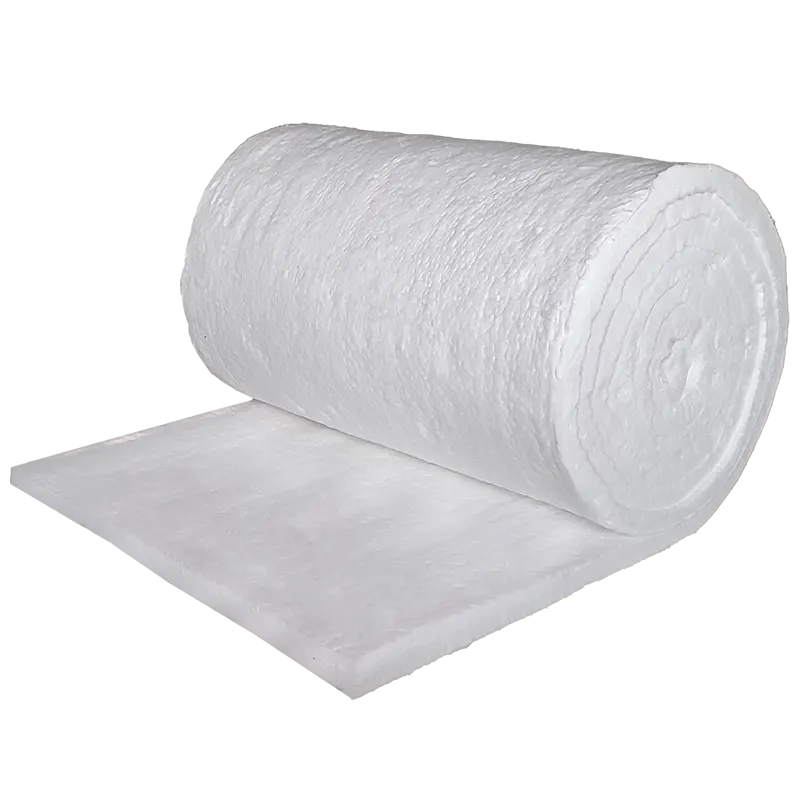
La lana de roca sirve a tres sectores B2B principales: Conductos HVAC para control térmico y acústico., Conjuntos de paredes comerciales para contención de incendios y amortiguación de sonido., y procesamiento industrial pesado para protección de equipos de alta temperatura. Los productos van desde envolturas livianas para conductos hasta tableros industriales de alta densidad capaces de soportar calor extremo..
Ámbito de aplicación: climatización, Sobre, y equipos de proceso
Los sistemas HVAC utilizan configuraciones especializadas de lana de roca., incluyendo envolturas de conductos, revestimientos rígidos, y secciones de tubería, para mantener la consistencia térmica y amortiguar el ruido del flujo de aire dentro de la infraestructura comercial. Mitigando los puentes térmicos y la vibración mecánica., Estas aplicaciones garantizan la eficiencia energética al tiempo que reducen significativamente la huella acústica de los sistemas mecánicos en complejos de oficinas y edificios institucionales..
Los conjuntos de paredes comerciales emplean bloques de lana de roca semirrígidos para establecer barreras críticas contra incendios y acústicas dentro de la envolvente del edificio.. Estos productos son parte integral de los sistemas perimetrales de contención de incendios y aislamiento de cavidades., Separar eficazmente los pisos y evitar el paso de las llamas en los diseños de muros cortina y, al mismo tiempo, reducir la transmisión de sonido entre los espacios arrendados..
Estándares de desempeño técnico y requisitos de densidad
Los productos de aislamiento HVAC suelen presentar densidades que van desde 35 a 48 kg/m³ para equilibrar el peso con el rendimiento de amortiguación acústica. Las temperaturas de servicio para estas aplicaciones generalmente tienen un límite de 230 a 250 °C., Cumple con EN 14303 Normas para lana mineral fabricada en fábrica en equipos de construcción.. Los puntos de referencia de conductividad térmica para envolturas de conductos estándar se alinean estrechamente con 0.035 con/(m·K) a 50ºC, Garantizar una retención de energía constante en todas las redes de distribución..
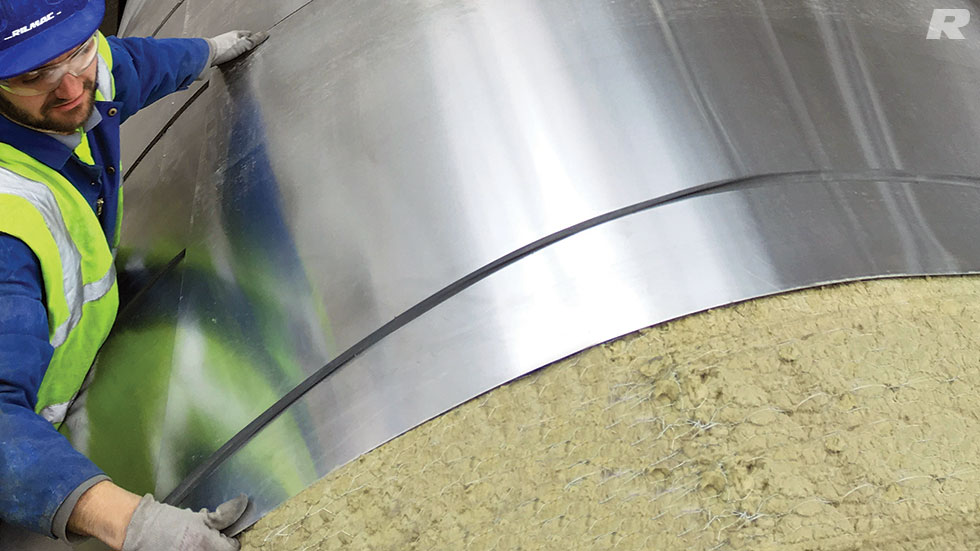
El aislamiento técnico industrial requiere una masa significativamente mayor para resistir el estrés mecánico y la degradación térmica.. Los fabricantes diseñan estas placas con densidades entre 96 y 150 kg/m³, permitiéndoles soportar temperaturas de funcionamiento continuo de hasta 750°C. Esta alta densidad respalda la integridad estructural debajo del revestimiento de metal pesado que a menudo se requiere en plantas de procesamiento e instalaciones de generación de energía..
El cumplimiento de normas contra incendios sigue siendo una prioridad universal en todos los rangos de densidad. Los productos cumplen con las clasificaciones de no combustibilidad Euroclase A1 y ASTM E136., formando el núcleo de los ensamblajes de pared diseñados para cumplir 1- criterios de resistencia al fuego de 2 horas. Estas normas garantizan que el aislamiento no aporta combustible al fuego., Mantener la seguridad de la envolvente del edificio y los activos industriales durante eventos críticos..
Comprensión del valor R y la densidad para proyectos comerciales
La lana de roca comercial suele ofrecer un valor R de R-3,8 a R-4,3 por pulgada., superior a los bloques de fibra de vidrio estándar. Si bien la densidad no aumenta linealmente el valor R, mayor densidad (8–12 libras/pie³) es fundamental para la resistencia al fuego, amortiguación acústica, y resistencia a la compresión en aplicaciones de servicio pesado como techos y muros cortina.
| Tipo de material | Valor R típico (por pulgada) | Ventaja comercial principal |
|---|---|---|
| Lana de roca comercial | R-3.8 – R-4.3 | Resistencia al fuego & resistencia a la compresión |
| Fibra de vidrio estándar | R-2.2 – R-2.7 | Rentabilidad para interiores |
| Espuma en aerosol de celda cerrada | R-6.0 – R-7.0 | Resistencia térmica máxima por pulgada |
| Batería contra incendios de alta densidad (3″) | ~R-4.2 (R-12.6Total) | Contención perimetral de incendios |
Estándares de amortiguación de sonido (NRC) para contratistas
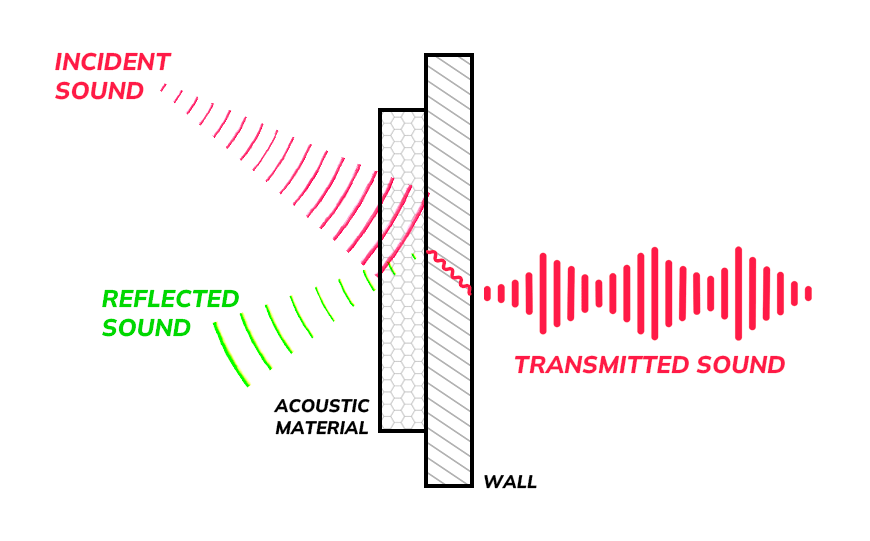
El coeficiente de reducción de ruido (NRC) Mide la capacidad de absorción acústica de un material en una escala que va desde 0.00 (pensativo) a 1.00 (absorbente). Los contratistas confían en estas calificaciones, determinado mediante pruebas ASTM C423, para controlar la reverberación en espacios comerciales. Para una reducción eficaz del ruido en oficinas y escuelas, Los estándares de la industria generalmente exigen materiales con un NRC de 0.70 o superior.
Decodificación de la escala NRC y los protocolos ASTM C423
NRC cuantifica la absorción del sonido promediando coeficientes en cuatro frecuencias de voz específicas: 250 Hz, 500 Hz, 1,000 Hz, y 2,000 Hz. Las pruebas siguen el protocolo obligatorio ASTM C423 para garantizar datos consistentes entre diferentes fabricantes de aislamiento.. La escala va desde 0.00, representando un reflejo perfecto como el vidrio, a 1.00 para una perfecta absorción, aunque la difracción de borde en las pruebas a veces puede producir resultados ligeramente superiores 1.0.
Materiales clasificados NRC 0.80 o superior definen el “Alto rendimiento” categoría para aplicaciones acústicas profesionales. El promedio de absorción acústica (CLIMA) está reemplazando gradualmente a NRC en especificaciones actualizadas midiendo 12 bandas de frecuencia entre 200 Hz y 2,500 Hz, ofreciendo mayor precisión para entornos acústicos complejos.
Especificaciones del proyecto: Calificaciones objetivo por aplicación
Los proyectos comerciales requieren niveles NRC específicos según la función del edificio.. Las aulas exigen un NRC mínimo de 0.75 para reducir el tiempo de reverberación (RT60) y mantener la inteligibilidad del habla. Los centros de llamadas y las oficinas de planta abierta requieren altos rangos de absorción de NRC 0,85 a 1,00 para evitar el desbordamiento del ruido., mientras que las áreas de circulación general, como vestíbulos y pasillos, suelen funcionar bien con calificaciones moderadas entre 0.60 y 0.75.
Los contratistas deben distinguir a NRC, que maneja la absorción de eco interno, de la clase de transmisión de sonido (STC), que mide qué tan bien una barrera bloquea el paso del sonido. Instalación de paneles con un NRC debajo 0.50 Por lo general, ofrece una amortiguación insuficiente para entornos comerciales que esperan un rendimiento acústico efectivo..
El futuro de la lana de roca: Sostenibilidad y contenido reciclado
El aislamiento de lana de roca respalda la sostenibilidad a través de un alto contenido reciclado, a menudo hasta 60% utilizando escoria y basalto, y es 100% reciclable al final de su vida. Su producción cumple con los estándares MACT y utiliza sistemas de agua de circuito cerrado., mientras que el reciclaje de lana de roca puede reducir las emisiones de carbono en casi 10% en comparación con la producción de material virgen.
Ratios de contenido reciclado y ciclo de vida circular
Las fórmulas modernas de lana de roca priorizan el uso de materias primas secundarias para minimizar el impacto ambiental.. Fabricantes, como la lana de roca americana, incorporar hasta 60% contenido reciclado en sus productos, Derivado principalmente de escoria de alto horno y roca basáltica natural.. Esta estrategia desvía eficazmente los subproductos industriales de los vertederos y reduce la energía necesaria para extraer y procesar piedra virgen..
El material apoya un modelo de economía circular porque sigue siendo 100% reciclable al final de su vida útil. A diferencia de algunos materiales aislantes que se degradan con el tiempo., La lana de roca conserva sus propiedades físicas., Permitir a los fabricantes volver a fundir bloques viejos para obtener un nuevo aislamiento sin pérdida de rendimiento térmico o resistencia al fuego.. Este ciclo de reutilización indefinido reduce significativamente la huella ambiental a largo plazo de la envolvente del edificio..
Estándares de fabricación y reducciones de emisiones de carbono
La integración de lana de roca reciclada en el proceso de fabricación genera beneficios de carbono mensurables. Los datos indican que el reciclaje de lana de roca en nuevos productos reduce las emisiones de carbono en aproximadamente 10% en comparación con los ciclos de producción que dependen exclusivamente de roca virgen. Esta reducción contribuye a reducir las emisiones de carbono incorporadas en los proyectos de construcción que buscan certificaciones de sostenibilidad..
Mejores prácticas de instalación para proyectos a gran escala
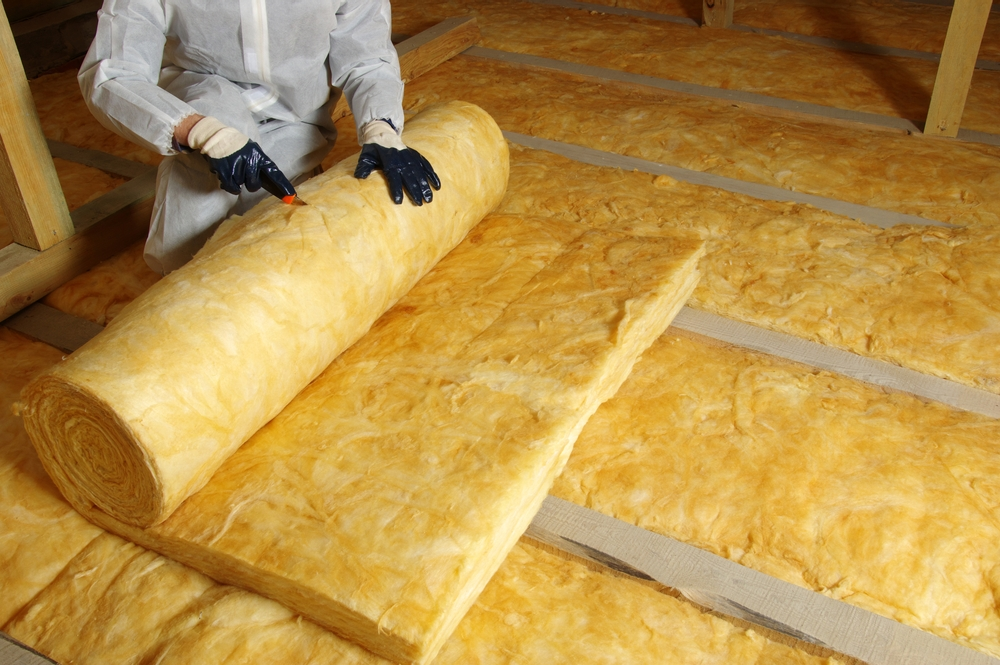
La instalación adecuada es fundamental para mantener el valor R nominal de la lana de roca. 3.7 a 4.3 por pulgada. Los estándares NAIMA requieren que los bloques llenen completamente las cavidades sin compresión., lagunas, o vacíos. Para grandes techos comerciales o áticos, Los contratistas suelen utilizar una estrategia de varias capas (colocar la primera capa paralela al marco y la segunda perpendicular) para eliminar los puentes térmicos..
Maximizar el rendimiento térmico: Relleno de cavidades y capas
Lograr el rendimiento térmico especificado en conjuntos de paredes y techos comerciales requiere un estricto cumplimiento de las normas de NAIMA. “Consejos técnicos” para instalación de fibra mineral. Los bloques deben llenar completamente la cavidad., encajando perfectamente contra todos los lados, termina, y superficies de contacto sin compresión. Incluso los espacios o huecos menores permiten el movimiento de aire convectivo que degrada significativamente el valor R general del sistema.. Los instaladores deben cortar el material a las dimensiones exactas en lugar de comprimir bloques de gran tamaño en compartimentos para montantes estándar., ya que mantener el espesor natural de la lana de roca es esencial para su eficacia aislante.
Para proyectos de áticos a gran escala que cumplen con códigos de alta resistencia térmica (p.ej., R-30, R-38, o R-49), una estrategia específica de secuenciación multicapa evita la pérdida térmica a través de los miembros estructurales. La primera capa de bloques se instala paralela al marco., al ras con la parte inferior y superior de las cuerdas. Luego se instala una segunda capa perpendicular a los miembros estructurales.. Esta capa transversal cubre eficazmente la madera estructural o el acero., mitigar los puentes térmicos y crear un continuo, Barrera térmica de alto rendimiento en toda la cubierta del techo..
Aislamiento continuo exterior y Fijación Mecánica
Tableros rígidos de alta densidad, como Comfortboard 80, se especifican frecuentemente como aislamiento continuo (CI) para fachadas de edificios comerciales para romper puentes térmicos creados por montantes de acero. A diferencia de la espuma ligera, Los tableros de lana de roca requieren una fijación mecánica robusta.. Los tableros generalmente se aseguran a través de listones de enrasado o soportes de revestimiento especializados que penetran hasta el sustrato estructural.. Este método de instalación garantiza que el aislamiento permanezca dimensionalmente estable bajo cargas de viento y proporciona una superficie plana., base rígida para la posterior aplicación del revestimiento.
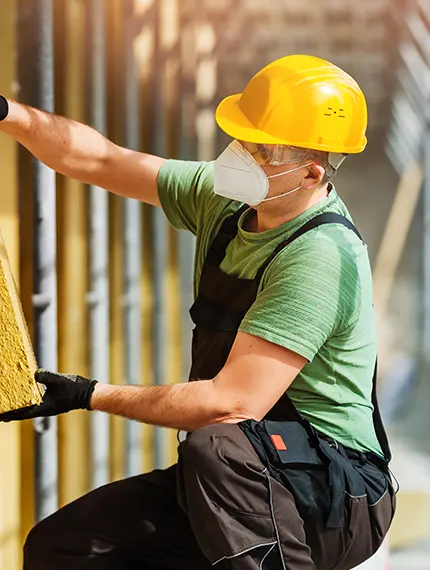
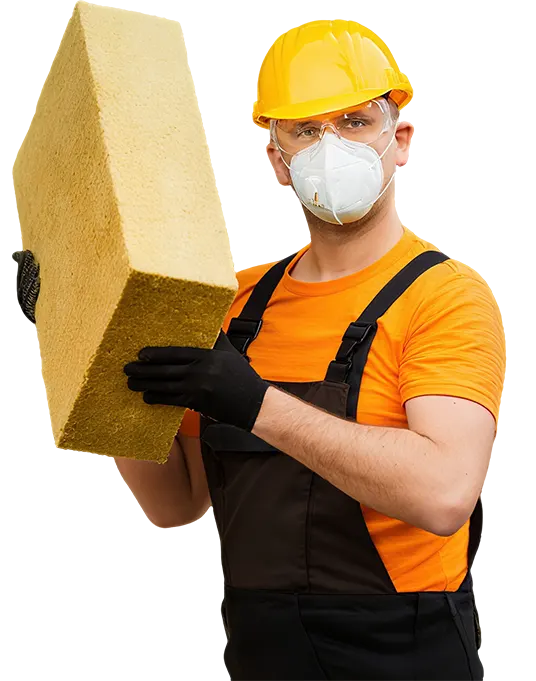
La integración de lana de roca rígida en la envolvente del edificio requiere detalles cuidadosos en las transiciones para mantener la estanqueidad al aire y al agua.. Los instaladores deben coordinar el diseño del aislamiento con tapajuntas de ventanas y barreras resistentes al agua. (WRB), Asegurar que todas las penetraciones estén selladas contra la entrada de humedad.. Además, Los protocolos de seguridad en sitios comerciales deben exigir el equipo de protección personal adecuado. (EPI) para las cuadrillas que manipulan estos materiales. Los requisitos estándar incluyen mangas largas., guantes, protección ocular, y máscaras antipolvo o respiradores para proteger contra la irritación de la fibra durante el corte y la instalación..
Fabricación de lana de roca premium: Incombustible & Soluciones energéticamente eficientes
Pensamientos finales
La selección de lana de roca requiere equilibrar el rendimiento térmico con la seguridad y el cumplimiento a largo plazo.. La lana de roca de alta densidad ofrece una resistencia al fuego superior, control acustico, y estabilidad dimensional, Hacer que la confiabilidad del proveedor sea tan crítica como la calidad del producto..
El éxito del proyecto depende de especificaciones verificadas y del abastecimiento de una empresa confiable. proveedor de aislamiento de lana de roca. Trabajando con certificados fábricas de lana de roca y experimentado proveedores de aislamientos de lana de roca garantiza el cumplimiento constante de las normas ASTM y Euroclass.
Para soluciones confiables de lana mineral, contacta a nuestro equipo en https://chinathermalinsulation.com/ para soporte técnico y cotizaciones personalizadas.
Preguntas frecuentes
¿Cuál es la vida útil esperada de la lana de roca en aplicaciones industriales??
Las normas suelen asignar una vida útil de 50 a 60 años a los aislamientos de lana de roca y de roca.. Los datos de campo apoyan esto, mostrando un rendimiento estable sin degradación durante más de 65 años cuando el material se instala correctamente.
¿Cómo afecta la orientación de las fibras a la resistencia de los tableros de lana de roca??
La orientación vertical de la fibra crea una resistencia a la compresión significativamente mayor que la orientación horizontal.. Los tableros producidos con métodos pendulares alinean las fibras verticalmente, que mejora la distribución de la carga y la fuerza de unión en comparación con las fibras horizontales basadas en sedimentación.
¿Qué resistencia al fuego se requiere para los conjuntos portantes??
Los conjuntos de carga deben cumplir con la norma 'R’ criterio de desempeño. En proyectos comerciales, las paredes y los pisos generalmente requieren una clasificación mínima de REI 60 (60 minutos), aumentando a REI 90 o REI 120 para estructuras de alto riesgo o de gran altura.
¿Cuál es la mejor forma de reducir el polvo al cortar lana de roca??
Los contratistas deben utilizar herramientas manuales de baja velocidad., como cuchillos o sierras de mano, en lugar de sierras eléctricas de alta velocidad. para limpieza, Se recomiendan aspiradoras industriales clasificadas para polvo Clase M en lugar de barrer en seco para evitar partículas en el aire..
¿Se puede utilizar lana de roca para aislamiento continuo? (CI) sistemas?
Sí, Los tableros de lana de roca de alta densidad están diseñados específicamente para aislamiento continuo. (CI) aplicaciones. Actúan como rígidos, revestimiento no estructural que cubre los miembros estructurales para cumplir con ASHRAE 90.1 estándares energéticos.
¿Cómo mitigan los instaladores los puentes térmicos con lana de roca??
Los puentes térmicos se producen cuando el calor viaja a través de pernos o tuberías conductores.. Los instaladores mitigan esto aplicando una capa continua de aislamiento de lana de roca sobre el marco exterior., Asegurarse de que no existan espacios en las juntas o penetraciones..