Überspringen Sie zu Inhalten

Im Gewerbebau, a failed sound transmission test can lead to expensive rework, Projektverzögerungen, and even breach of contract. Specifying the right material is about mitigating the financial liabilities tied to noise complaints and ensuring the final space is functional and habitable.
This guide provides a technical breakdown for project managers and specifiers evaluating Glaswolle for soundproofing. We will cover the specific installation methods required to achieve optimal acoustic isolation, compare its performance directly against other insulation types, and outline the key B2B factors for commercial projects. Think of this as a procedural manual for making an informed material decision that aligns with both performance requirements and budget constraints.
How Glass Wool Works for Soundproofing
Glass wool’s effectiveness in soundproofing isn’t about blocking noise, but absorbing it by converting sound wave energy into heat through its porous, fibrous matrix.
Fibrous Structure and Sound Absorption
The primary soundproofing mechanism of glass wool lies in its porous and non-rigid fibrous structure. When sound waves hit the material, they must navigate a complex web of fibers and millions of tiny air pockets. This friction converts the acoustic energy into a negligible amount of heat, effectively dissipating the sound before it can pass through.
- The open-fiber matrix disrupts the direct path of sound waves, preventing them from traveling through the assembly.
- This absorption method is highly effective for mid-to-high frequency sounds, such as human speech and music.
- The energy conversion process significantly dampens the overall noise level perceived on the other side of the partition.
Role in Mass-Spring-Mass Systems
In modern construction, glass wool functions as a critical component in mass-spring-mass assemblies. It acts as the “spring” or damping layer between two rigid mass layers, like drywall panels. This creates a decoupled structure that mechanically isolates one side from the other, inhibiting the transfer of vibrational energy.
- By filling the cavity between wall studs or floor joists, the glass wool separates the two outer surfaces.
- This separation stops vibrations from traveling through the solid framework of the building, which is a common path for noise.
- This technique is a standard and proven method for building high-performance soundproof walls, Decken, and floors in commercial spaces.
Geräuschreduzierungskoeffizient (NRC) Leistung
The acoustic performance of glass wool is quantified by its Noise Reduction Coefficient (NRC), a rating that indicates how much sound an object absorbs. Glass wool consistently achieves high NRC ratings, making it a reliable and predictable material for acoustic design and control.
- Typical NRC ratings for acoustic glass wool range from 0.90 Zu 1.00, meaning it absorbs 90% Zu 100% of the sound that contacts its surface.
- Its performance is well-balanced across low, mid, and high frequencies, providing comprehensive sound control for various environments.
- The density and thickness of the glass wool can be specified to target particular problem frequencies or meet specific project requirements.
Factors Affecting Acoustic Performance
Acoustic performance is a function of microscopic fiber engineering, macroscopic material properties like density, and correct on-site handling.
Fiber Diameter and Structural Composition
The acoustic effectiveness of glass wool is largely determined by its microscopic structure. Engineering the diameter of the fibers allows for targeted absorption of specific sound frequencies, while advanced layering can create solutions for broadband sound dampening.
- Fiber diameters are often optimized within a 3–15 micron range to capture different sound wavelengths.
- Dual-gradient layer structures can be used to absorb a wider spectrum of frequencies, from low to high.
Density and Thickness
Two of the most fundamental variables are the material’s density and thickness. Greater density and thickness generally lead to better sound absorption, especially for lower-frequency sounds that are more difficult to block.
- Higher material density increases its ability to impede the transmission of sound waves.
- Thicker insulation forces sound energy to travel through more material, causing it to dissipate.
Installation and Compression
The way glass wool is installed can significantly alter its acoustic performance. Compressing the material changes its density and airflow resistance, which can affect its ability to absorb sound in field applications.
- Over-compressing glass wool in a cavity can negatively impact its sound absorption capabilities.
- Ensuring the material fits correctly without undue compression is important for achieving its rated performance.
Source Certified, Custom-Engineered Glass Wool
Installation Methods for Optimal Soundproofing
The acoustic performance of glass wool hinges less on the material itself and more on installation precision; even minor gaps or compression can nullify its sound-dampening properties.
Ensuring a Gap-Free Friction Fit
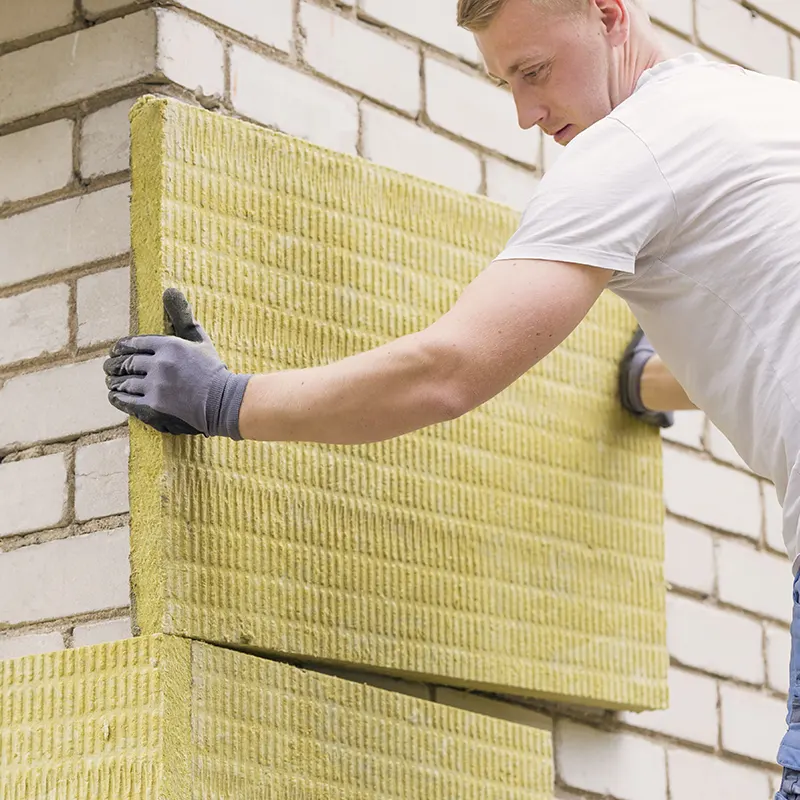
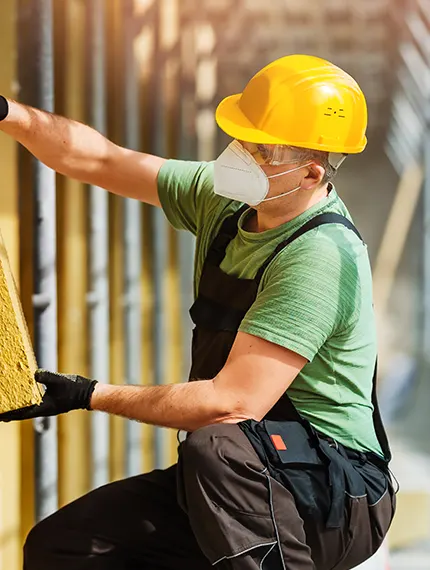
The primary method for installing glass wool for acoustic performance is the friction fit technique. This involves cutting the insulation slightly larger than the cavity and pressing it firmly between framing members. The material’s natural elasticity creates a snug fit that holds it in place without fasteners. A proper friction fit is critical because it forms a complete seal against the framing, eliminating the air gaps that serve as primary channels for sound transmission.
| Installation Parameter | Correct Method (Optimal Performance) | Häufiger Fehler (Reduced Performance) |
|---|---|---|
| Friction Fit Sizing | Cut insulation slightly oversized (Z.B., ½ inch wider) to ensure a tight seal against framing. | Cutting insulation to the exact size or smaller, which creates air gaps and sound paths. |
| Material Compression | Allow the material to expand to its full, intended thickness within the cavity to maximize air pocket volume. | Forcing oversized batts into shallow cavities, which compacts the fibers and reduces acoustic absorption. |
| Penetration Sealing | Carefully cut and place insulation tightly around all electrical boxes, Rohre, und Kanäle. | Leaving gaps around service penetrations, creating direct pathways for noise to bypass the insulation. |
Achieving Complete Cavity Coverage
For soundproofing to work, the insulation must completely fill the entire cavity from the top plate to the bottom plate without folds, Kompression, or empty spaces. Inconsistent coverage creates weak points in the acoustic barrier that significantly reduce performance. Compressing the glass wool is detrimental, as field data shows it diminishes the material’s ability to dampen sound waves. If a cavity’s depth exceeds the insulation’s thickness, installers must provide adequate support to prevent the material from sagging and creating gaps over time.
Sealing Around Penetrations
Sound acts like water, finding the smallest path of least resistance. These paths are often the small openings around electrical outlets, plumbing, and other services penetrating the wall. Meticulously cutting and fitting insulation around these penetrations is non-negotiable. Any unsealed gaps, no matter how small, can undermine the acoustic integrity of an entire wall assembly. Properly sealing these areas is just as important as filling the main cavities correctly.
Comparing Glass Wool with Other Soundproofing Materials
While mineral wool offers higher density for superior sound blocking, glass wool provides a compelling balance of cost-effectiveness and easier handling for a wide range of commercial projects.
When selecting an acoustic insulation material, the primary decision often comes down to balancing performance requirements with project constraints like budget and structural load. Glass wool competes directly with other fibrous insulation materials, most notably mineral wool and rock wool, each offering a distinct set of trade-offs.
Mineral Wool and Rock Wool
Mineral wool and Steinwolle provide superior acoustic performance primarily because of their higher density. This dense composition more effectively blocks a wide spectrum of sound frequencies. These materials consistently achieve Sound Transmission Class (STC) Bewertungen zwischen 45 Und 52, making them the standard choice for high-performance soundproofing in commercial and industrial settings where maximum sound isolation is the primary objective.
| Besonderheit | Glaswolle | Mineralwolle (Felswolle) |
|---|---|---|
| Akustische Leistung | Good sound absorption (NRC up to 1.00) | Superior sound blocking (STC 45–52) |
| Dichte | Lighter and more flexible | Significantly denser and more rigid |
| Kosten | Kostengünstiger (10–30% lower) | Higher price point |
| Installation | Easier handling, faster installation | Schwerer, adds to structural load |
| Feuerwiderstand | Nicht brennbar (melts ~600°C) | Vorgesetzter, nicht brennbar (melts >1000°C) |
Cost-Effectiveness and Project Budget
Glass wool remains a highly cost-effective solution for soundproofing, typically priced 10-30% lower than mineral wool. This affordability makes it a practical choice for mid-range commercial and residential projects where good acoustic performance is required without the budget for premium materials. The strong performance-to-cost ratio allows for acoustic treatment across larger areas, maximizing the impact of a limited budget. Manufacturers are also developing improved acoustic glass wool variants to close the performance gap while maintaining this key cost advantage.
Installation and Handling Considerations
The physical properties of these materials directly impact project logistics. While mineral wool’s rigidity can simplify friction-fit installations, it is also much heavier. This increased weight can complicate transport, slow down handling on-site, and add to structural load considerations in large-scale deployments. Glass wool’s lighter composition offers a clear advantage, simplifying logistics and reducing installation time. For large projects with specific structural limits or tight timelines, material weight is a critical decision factor.
Weitere Vorteile über die Schalldämmung hinaus
Glass wool delivers value far beyond acoustics by integrating thermal performance, Brandschutz, Nachhaltigkeit, and durability into a single, cost-effective material.
Thermal Insulation and Energy Efficiency
While effective for soundproofing, glass wool’s primary function is thermal insulation. Its fibrous structure traps air, significantly reducing heat transfer through a building’s envelope. This maintains more stable indoor temperatures year-round, which directly lowers the energy load on heating and cooling systems. For any commercial or industrial facility, this translates to reduced operational costs and a smaller carbon footprint.
- Lowers energy bills by improving a building’s thermal performance.
- Helps meet energy efficiency standards and building codes.
- Contributes to a consistent and comfortable indoor climate.
Fire Safety and Non-Combustibility
Constructed from inorganic materials like sand and recycled glass, glass wool is naturally non-combustible. It will not ignite, contribute to flame spread, or produce toxic smoke when exposed to high heat. This inherent fire resistance is a critical passive safety feature in commercial buildings, helping architects and contractors meet stringent fire codes and protect both property and occupants.
- Provides passive fire protection for building structures.
- Does not produce toxic smoke when exposed to high heat.
- Essential for compliance with commercial fire safety codes.
Nachhaltigkeit und recycelter Inhalt
Modern glass wool manufacturing heavily utilizes recycled content, primarily post-consumer glass. This practice aligns with contemporary sustainability goals by diverting significant waste from landfills and reducing the consumption of virgin raw materials. Specifying glass wool supports green building initiatives and can contribute to certifications like LEED, demonstrating a commitment to environmentally responsible construction.
- Utilizes recycled materials in its composition.
- Supports green building initiatives and certifications.
- Reduces the overall environmental footprint of a project.
Moisture and Pest Resistance
The inorganic fibers of glass wool do not absorb moisture, was die Bildung von Schimmel verhindert, Mehltau, and bacteria that can degrade other building materials and impact air quality. Because it offers no nutritional value, it does not attract rodents, insects, or other pests. This resilience ensures the insulation maintains its structural integrity and performance for the life of the building without degradation from common environmental factors.
- Prevents mold and rot by resisting moisture absorption.
- Does not attract rodents, insects, or other pests.
- Ensures a long service life and consistent performance.
B2B Considerations for Commercial Projects
Commercial clients in 2026 demand integrated insulation systems that combine acoustic control, thermischer Wirkungsgrad, and regulatory compliance to lower long-term operational costs and enhance workplace productivity.
Integrated Thermal and Acoustic Performance
In today’s commercial projects, organizations prioritize materials that solve multiple problems at once. An insulation system is no longer just for thermal control; it must also deliver effective soundproofing. This dual-function approach creates quieter, more productive workspaces while cutting energy consumption and operational costs. The market has shifted toward single-product systems that simplify material sourcing and streamline installation for contractors, a key driver in large-scale deployments.
Regulatory Compliance and Safety Standards
Meeting strict building codes and workplace safety standards is non-negotiable. Commercial clients select insulation that is certified for noise management and fire safety to ensure operational integrity and mitigate risk. This includes verifying fire safety ratings like non-combustibility and adhering to mandated noise reduction levels in sectors like manufacturing, healthcare, and hospitality. Compliance is a baseline requirement, not a feature.
| B2B Decision Factor | Glaswolle | Mineralwolle |
|---|---|---|
| Akustische Leistung | Excellent for broad frequency absorption (NRC up to 1.00). | Überlegen durch höhere Dichte, ideal for high STC rating needs. |
| Brandschutz | Non-combustible with a melting point around 600°C. | Überlegene Feuerbeständigkeit, withstanding temperatures over 1000°C. |
| Cost-Effectiveness | Generally more affordable, providing a strong cost-to-performance ratio. | Higher initial cost but justified for specialized performance needs. |
| Installation & Handhabung | Lightweight and flexible, which can speed up installation time. | Denser and more rigid, offering easier friction-fit installation in cavities. |
Sustainability and Retrofitting Applications
Environmental responsibility directly influences material selection. There is a clear market preference for insulation with high recycled content, like glass wool, which can contain up to 86% post-consumer glass. For existing buildings, businesses favor lightweight, easy-to-install systems ideal for retrofitting. These materials allow for efficient energy and acoustic upgrades without causing significant operational disruption, making them a practical choice for improving older commercial properties.
Long-Term Operational Cost Reduction
Sophisticated B2B clients evaluate insulation based on its total cost of ownership, not just its initial price. High-performance glass wool is viewed as a capital investment that delivers a tangible return through lower energy bills, improved employee focus in noise-sensitive environments, und langfristige Haltbarkeit. By selecting robust materials that resist moisture and pests, companies minimize future maintenance and replacement costs, securing a better financial outcome over the building’s lifecycle.
Abschluss
Glass wool is a proven and effective material for studio soundproofing when its technical specifications are matched to the project’s needs. Achieving optimal acoustic isolation depends on selecting the appropriate density and thickness. Proper installation is critical to maximizing its sound-dampening performance.
If you are planning a studio build, our team can provide the technical data sheets needed to specify the right product for your design. We can help you source glass wool that meets your exact acoustic and budget requirements.
Häufig gestellte Fragen
Which type of glass is best for soundproofing?
For superior soundproofing, acoustic laminated glass is the industry-leading choice. This glass features a specialized interlayer, typically made of polyvinyl butyral (PVB), bonded between two panes of glass. This interlayer acts as a damping core, effectively absorbing sound vibrations and disrupting sound waves, particularly in the mid-to-high frequency ranges of human speech and traffic noise. For maximum performance, an Insulated Glass Unit (IGU) combining a pane of acoustic laminated glass with a second pane of standard or thicker glass, separated by an air or gas-filled gap, provides the best results across the entire sound spectrum.
What is the most effective soundproofing material?
The most effective soundproofing is achieved not by a single material, but by a “mass-spring-mass” system. This involves combining materials with different properties. High-density materials like mass-loaded vinyl (MLV) or multiple layers of gypsum board provide the “mass” to block sound transmission. Fibrous, sound-absorbing materials like glass wool serve as the “spring,” installed in a cavity to absorb sound energy and prevent resonance. Glass wool is a dominant and highly effective absorption material, achieving a Noise Reduction Coefficient (NRC) bis zu 1.00. For optimal results, this system should also include decoupling techniques, such as resilient channels, to isolate structures and stop vibrations from passing through.
Glass wool or mineral wool, which is best for insulation?
The best choice depends on the specific application. Glass wool is an excellent, cost-effective solution for standard thermal and acoustic insulation in walls, Lofts, und Böden, performing exceptionally well at absorbing mid-to-high frequency sounds. Mineralwolle (also known as rock wool) is denser, giving it a slight advantage in blocking low-frequency noise. It also has a higher melting point, providing superior fire resistance, and offers better moisture-wicking properties. daher, for general-purpose applications, glass wool is ideal. For projects demanding enhanced low-frequency soundproofing, superior fire-stopping, or high moisture tolerance, mineral wool is the preferred technical choice.