सामग्री को छोड़ दें

How ceramic fiber blankets are made directly determines their reliability in preventing thermal failure within high-temperature industrial furnaces, भट्टों, और रिएक्टर.
This guide provides a step-by-step engineering overview of the manufacturing process. We will cover the specific raw materials used, detail the melting and fiberization process, and compare the two primary forming methods: spinning versus blowing.
You will also learn how critical parameters like blanket thickness, घनत्व, and heat treatment are controlled to ensure consistent thermal performance and structural integrity.
Raw Materials Used in Ceramic Fiber Production
The final thermal performance of a ceramic fiber product is determined at the source, hinging on the precise ratio and purity of its foundational raw materials.
The manufacturing process for any high-performance सिरेमिक फाइबर product starts with a carefully selected mix of raw materials. The quality and composition of this initial mix directly control the insulation value, temperature rating, and long-term stability of the final blanket, तख़्ता, or textile. Inconsistent or low-purity inputs will inevitably lead to an inferior product with unpredictable performance in critical industrial environments.
Core Components: Alumina and Silica
High-purity alumina (Al₂O₃) और सिलिका (SiO₂) form the backbone of standard alumino-silicate fibers. The ratio between these two components is the primary variable manufacturers adjust to define a product’s service temperature and thermal stability. Many operations use kaolin clay as a cost-effective source, as it naturally contains both alumina and silica. The goal is always to achieve a balanced, homogenous mixture that melts uniformly and produces consistent fibers.
- Standard ceramic fibers are built on a primary composition of alumina and silica.
- Kaolin clay serves as a common, cost-effective source material for both core components.
- The selection process prioritizes a balanced chemical composition to guarantee consistent thermal performance.
Performance-Enhancing Additives
For applications demanding higher temperature resistance, manufacturers introduce specific additives into the raw material blend. Zirconium, उदाहरण के लिए, is a common addition that significantly increases the maximum service temperature of the fiber. Other chemical agents are used to control the viscosity of the molten material and improve the fineness of the fibers during the spinning or blowing process. These additives are essential for creating specialized products tailored to extreme industrial conditions.
- Zirconium is incorporated into the raw material mix to increase refractoriness for high-temperature service.
- Formulations include specialized additives to refine fiber properties and enhance thermal shock resistance.
- These agents also help control melt viscosity, leading to a more uniform fiber and a stable production process.
Material Purity and Preprocessing
The quality of the final ceramic fiber blanket is non-negotiable and depends entirely on the purity of the raw inputs. Before the materials enter the furnace, they undergo preprocessing steps like automated crushing and cleaning. This preparation standardizes particle size, which is critical for ensuring a uniform melt and consistent fiber quality. Any impurities or variations in the raw material stage will carry through the entire process, compromising the integrity of the end product.
- Achieving optimal thermal performance and preventing product defects depends on high raw material purity.
- Preprocessing steps, such as automated crushing and cleaning, standardize particle size before melting.
- This consistency in preprocessing directly translates to predictable performance across all final product forms, including blankets, बोर्डों, and textiles.
Melting and Fiberization Process
The quality of ceramic fiber is fundamentally determined during the melting and fiberization stage, where precise thermal control and the choice of conversion technique dictate the material’s final performance characteristics.
Electric Furnace Melting of Alumina-Silica
The production process begins by melting high-purity alumina-silica mixtures in electric furnaces. This method provides exacting temperature control, reaching approximately 2,000°C to create a completely uniform molten liquid. Using raw materials with impurity levels below 1% is critical, as this directly contributes to the final product’s thermal stability and refractory properties. The electric furnace technology ensures a consistent and efficient melt, producing a homogenous stream of material essential for high-quality fiber formation.
Converting Molten Material into Fibers
Once the alumina-silica mixture is liquefied, it is transformed into fine fibers. The two primary methods for this conversion are spinning and blowing. Spinning techniques utilize high-speed centrifuges to extrude the molten material, producing long and resilient fibers with high tensile strength. Blowing techniques use jets of high-pressure compressed air to create shorter fibers. The selection of either spinning or blowing is a critical decision that directly influences the resulting material’s thermal conductivity, ताकत, and suitability for specific applications like blankets, बोर्डों, or paper.
| Process Stage | Key Technology/Method | Impact on Fiber Quality |
|---|---|---|
| गलन | Electric Furnace (~2,000°C) | Ensures homogenous molten stream and supports high thermal stability from pure materials (<1% impurity). |
| फाइबरीकरण | High-Speed Centrifuges (Spinning) | Produces long, resilient fibers with superior tensile strength for durable applications. |
| Diameter Control | Water-Cooled Molybdenum Orifices | Provides precise and consistent fiber diameter, which is critical for uniform insulation performance. |
Technological Controls for Fiber Quality
Modern manufacturing lines integrate advanced equipment to refine fiber characteristics and maximize production yield. High-speed centrifuges are standard for maximizing the volume of fibers produced from the molten material. To ensure consistency, water-cooled molybdenum orifices are used to maintain precise control over fiber diameter as the material is extruded. Later in the process, specialized needling equipment mechanically bonds these fibers together. This binder-free approach creates a strong, interlocking web, enhancing the structural integrity and delamination resistance of the final blanket without relying on chemical additives that can burn off at high temperatures.
Custom Ceramic Fiber for High-Temp Efficiency
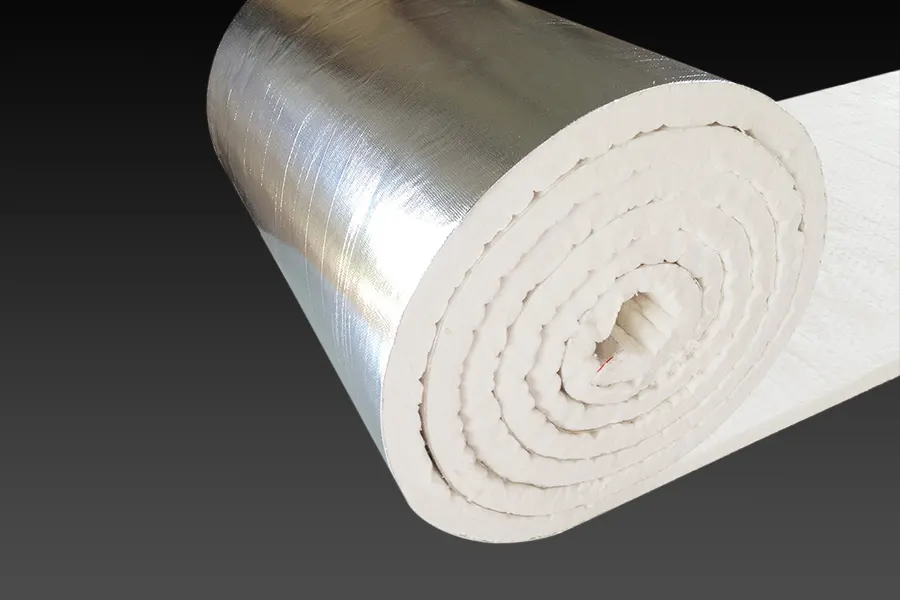
Spinning vs Blowing: Two Core Fiber Forming Methods
The choice between spinning and blowing directly dictates the final product’s performance, with blowing creating fine fibers for papers and spinning producing strong, long fibers for structural blankets and modules.
In ceramic fiber manufacturing, the fiberization stage is where the molten raw material is converted into fibrous strands. Two dominant methods, blowing and spinning, are employed, each tailored to produce fibers with specific characteristics for different industrial applications. The selection of one over the other is a critical decision that impacts everything from tensile strength to insulation properties.
Blowing Process for Fine Fibers
The blowing process uses high-velocity air or gas to draw the molten stream of alumina-silica into fine, shorter fibers. This technique is the standard for manufacturing ceramic fiber paper, where a delicate and uniform fiber structure is essential. The resulting material provides excellent lightweight insulation for products that demand precision.
- This method excels at producing the fine fibers required for specialty papers, gaskets, and seals.
- A modern variation, solution blow spinning, offers greater cost-effectiveness and production flexibility for specialized outputs.
- The fine texture and low density of blown fibers are ideal for applications where bulk strength is secondary to thermal performance and uniformity.
Spinning Process for Structural Strength
Spinning creates longer, stronger, and more durable fibers by throwing the molten material from a high-speed rotating disk or centrifuge. This method is the preferred choice for high-performance insulation products that require significant structural integrity, such as blankets, मॉड्यूल, and textiles used in demanding thermal environments.
- Spinning is essential for products where fiber strength, resilience, and durability are critical performance metrics.
- Centrifugal spinning is a key development, enabling high-throughput production for large-scale manufacturing.
- The resulting robust fibers are used to create insulation for furnace linings, भट्टों, and other high-stress industrial applications.
| Attribute | Blowing Process | Spinning Process |
|---|---|---|
| Fiber Characteristic | Fine, shorter fibers | Long, stronger, more durable fibers |
| प्राथमिक अनुप्रयोग | Ceramic fiber paper, gaskets, सील | कम्बल, मॉड्यूल, बोर्डों, कपड़ा |
| Key Performance Benefit | Uniformity and lightweight insulation | High tensile strength and structural integrity |
Method Selection Based on Application Needs
The decision to use spinning or blowing is entirely driven by the final product’s intended function. Manufacturers select the process that yields the precise fiber properties—length, diameter, and strength—required for optimal performance in a specific environment. Blowing is chosen for products where fine texture and low density are the goal. Spinning is the only choice when tensile strength and material resilience are the primary requirements for withstanding mechanical stress and high temperatures. Industry advancements continue to refine both methods, pushing for greater efficiency and enabling the production of highly customized fiber outputs for specialized thermal solutions.
Fiber Collection and Blanket Formation
Modern ceramic fiber blanket formation relies on automated collection and mechanical needle-punching, a process that creates a strong, binder-free structure with optimized thermal performance.
Automated Fiber Collection Systems
Once the raw materials are fiberized, the loose fibers are immediately pulled onto a moving conveyor belt using a negative-pressure (vacuum) system. This automated process ensures the fibers are deposited into a uniform, continuous mat. The system is calibrated to create a consistent initial thickness and density before the mat undergoes compression. Critically, this collection stage also helps separate and remove unfiberized material, या “गोली मारना,” which improves the final blanket’s insulation value and texture.
Needle-Punching for Mechanical Bonding
The unbonded fiber mat is then fed into a needle-punching machine, or needle loom. This equipment uses thousands of specialized barbed needles that punch vertically through the mat, physically entangling and interlocking the fibers. This mechanical bonding process is what gives the blanket its tensile strength and structural integrity without relying on chemical binders. Because no binders are used, the blanket will not produce smoke or fumes during its initial high-temperature exposure in an industrial setting.
Optimizing Fiber Alignment and Structure
Advanced manufacturing controls the density, pattern, and depth of the needling process to optimize the final blanket’s properties. By precisely controlling fiber alignment and entanglement, we can engineer blankets with superior tear resistance and resilience to vibration and thermal shock. The resulting structure provides a careful balance between flexibility for easy installation around complex shapes and the mechanical strength needed to withstand industrial handling and long-term service.
मोटाई, घनत्व, and Weight Control in Blanket Manufacturing
Achieving precise product specifications in ceramic fiber blankets hinges on a tightly controlled process combining automated material feed rates, calibrated mechanical compression, and strategic heat treatment to ensure dimensional stability.
Mechanized Feed and Compression Control
Precise control over material feed rates and mechanical compression is fundamental to achieving consistent blanket thickness and density. Automated systems ensure uniformity across the entire production run, eliminating the inconsistencies common in manual or semi-automated processes. This level of control directly impacts the final product’s thermal performance and mechanical strength.
- Automated feed-rate systems manage the consistent flow of bulk ceramic fibers into the needling looms, setting the initial mass per unit area.
- Compression rollers are calibrated to apply specific, repeatable pressure, which locks in the target density and ensures a uniform thickness from edge to edge.
Managing Bulk Density Ranges
Blanket density is engineered to meet different application requirements, from lightweight thermal insulation for pipes to high-durability linings in industrial furnaces. Production lines can be adjusted to produce specific density profiles by altering the fiber feed and compression settings, allowing for a range of products tailored to distinct operational demands.
| Density Grade | Bulk Density Range (किग्रा/वर्ग मीटर) | प्राथमिक अनुप्रयोग |
|---|---|---|
| लाइटवेट | 64 – 96 | Flexible insulation, पाइप लपेटना, low-stress environments. |
| मानक | 128 | General furnace linings, बॉयलर इन्सुलेशन, high-temperature seals. |
| High-Durability | 160 | High-velocity gas zones, forging furnaces, applications with mechanical stress. |
- Standard bulk densities range from 64 kg/m³ for flexible insulation up to 160 kg/m³ for high-durability applications where greater structural integrity is required.
- For complex parts or non-standard shapes, specialized vacuum-forming techniques are used to create custom density profiles that match specific component geometries.
Thermal Setting for Dimensional Stability
After the needling and compression stages, blankets undergo a critical heat treatment process to stabilize their structure. This step is designed to minimize permanent linear shrinkage when the product is exposed to high temperatures during its operational life. Proper thermal setting is key to ensuring the blanket maintains its insulating properties and physical form over time.
- Advanced thermal setting processes limit permanent shrinkage to below 3.0% when the material is subjected to its maximum rated operating temperature.
- Post-treatment, continuous cutting and sizing operations ensure the final product dimensions are consistent and meet strict manufacturing tolerances.
Heat Treatment and Product Stabilization
Heat treatment is the final manufacturing stage that locks in a ceramic fiber blanket’s thermal stability and mechanical strength by burning off binders and inducing fiber crystallization.
After the needling process, the ceramic fiber blanket undergoes a critical heat treatment phase. This is not simply a drying process; it’s a controlled thermal process that fundamentally alters the material’s properties to prepare it for high-temperature industrial service. The primary function is to stabilize the fiber structure, ensuring it performs reliably under extreme thermal stress.
Purpose of Heat Treatment in Fiber Stabilization
The heat treatment process finalizes the blanket’s physical and chemical characteristics. By subjecting the material to high temperatures in a controlled environment, manufacturers remove residual processing aids and lock in the interwoven fiber network created during needling. This step transforms the mechanically bonded mat into a structurally stable insulation product.
- Binder Removal: The primary goal is to eliminate any organic lubricants or binding agents applied during fiberization. These agents are necessary for processing but would compromise performance at high temperatures if left in the final product.
- Fiber Crystallization: Heating induces crystallization within the amorphous alumina-silica fibers. This structural change significantly improves the material’s thermal stability and mechanical integrity at its rated service temperature.
- Mechanical Strengthening: The process enhances the blanket’s overall strength and resilience, ensuring it can handle the physical stresses of installation and long-term industrial use without degrading.
Controlled Furnace Protocols
में 2026, production facilities use specialized furnaces with precise, automated control over heating and cooling cycles. The specific temperature profiles, which can range from 500°C to 1200°C, are engineered based on the blanket’s chemical composition and the target performance specifications. This level of control ensures product consistency and quality across entire production runs.
- Blankets are passed through continuous or batch high-temperature furnaces.
- Heating cycles, temperature ramp rates, and hold times are carefully managed to achieve uniform properties throughout the blanket’s thickness and width.
- Advanced protocols are programmed to optimize tensile strength and minimize shrinkage during service.
Effect on Service Temperature and Durability
The effectiveness of the heat treatment directly determines the final performance rating of the ceramic fiber blanket. This step establishes the maximum continuous use temperature the product can withstand without significant structural degradation or excessive shrinkage. A properly treated blanket maintains its insulating properties and physical form even after repeated thermal cycling.
- This process sets the official long-term service temperature rating for the product.
- It improves the material’s ability to retain tensile strength after prolonged exposure to high heat.
- It ensures reliable performance in industrial applications where temperatures can exceed 1260°C (2300°F).
Quality Control and Performance Testing
Rigorous quality control is non-negotiable in ceramic fiber blanket production, focusing on validating mechanical strength, minimizing non-fiberized material, and verifying performance at extreme service temperatures to ensure product reliability.
A finished ceramic fiber blanket is only as good as the testing that validates its performance. Consistent quality control ensures every batch meets stringent industrial requirements for durability, थर्मल दक्षता, और सुरक्षा. This involves a series of standardized tests that scrutinize the product’s physical and thermal properties from the fiber level up.
Tensile Strength and Mechanical Integrity Validation
में 2026, a key quality metric is the material’s ability to resist tearing and pulling forces, especially under thermal stress. Testing confirms that ceramic fiber blankets meet mechanical integrity standards necessary for handling and installation in demanding environments. High-performance applications require a tensile strength of over 75 kilopascals to prevent damage during installation or operation.
- Assessment of material resistance to mechanical stress.
- Verification of structural durability at extreme temperatures.
- Optimization of needle punching density to enhance tear resistance.
Shot Content and Fiber Uniformity Control
This process minimizes the amount of non-fiberized material, या “गोली मारना,” within the blanket. Shot are small, bead-like particles of melted material that failed to form into fibers. By lowering the shot content, typically to below 15%, we improve the blanket’s thermal efficiency and ensure consistent insulating performance across the entire product surface. High shot content creates thermal bridges that compromise insulation value.
- Quantification of unfiberized particles to ensure product purity.
- Confirmation of even fiber distribution for uniform insulation.
- Reduction of thermal conductivity variance within a single blanket.
Thermal Performance and Service Temperature Verification
Advanced heat treatment tests certify the blanket’s long-term stability and performance at its specified service temperature. These tests expose the material to its maximum rated temperature for an extended period to measure shrinkage and degradation. Standardized protocols in 2026 include thermal processing at 1200°C to validate performance claims, ensuring the product will not fail prematurely in a high-heat industrial setting.
- Analysis of material shrinkage and degradation after heat exposure.
- Confirmation of the product’s maximum continuous use temperature.
- Ensures consistent insulating properties throughout the product’s lifecycle.
निष्कर्ष
The manufacturing process for ceramic fiber blankets involves several critical stages, from melting raw materials to precise density control and heat treatment. Each step directly influences the final blanket’s thermal resistance, tensile strength, और दीर्घकालिक स्थायित्व. This control over production ensures a reliable and consistent insulation solution for high-temperature industrial applications.
If your project requires specific thermal or mechanical properties, our team can provide detailed product specifications or discuss custom manufacturing options. Contact us to get the technical data sheets or a sample for your evaluation.
अक्सर पूछे जाने वाले प्रश्नों
How to make a ceramic fiber blanket?
The manufacturing process begins by melting high-purity raw materials like alumina and silica in an electric furnace at temperatures around 2000°C (3600°F). The molten material is then fiberized by being spun on high-speed wheels or hit with a jet of high-velocity air. These resulting fibers are collected on a conveyor to form a continuous mat. अंत में, this mat is mechanically needled, a process that interlocks the fibers to give the blanket its strength and integrity without chemical binders, before being cut to final dimensions.
What materials used?
The primary raw materials for ceramic fiber production are high-purity alumina (Al₂O₃) और सिलिका (SiO₂). These are often supplemented with other materials such as kaolin, zirconium, and specialized additives that help control viscosity during melting and enhance the final product’s thermal performance and fiber quality.
What are ceramic blankets made of?
Ceramic fiber blankets are composed of long, लचीला, and intertwined fibers manufactured from a base of high-purity raw materials. The core components are alumina (Al₂O₃) और सिलिका (SiO₂), which are melted and spun into a fibrous structure. Some formulations also include zirconium to increase the maximum service temperature.
Is ceramic fiber blanket better than glass wool?
The choice depends entirely on the application’s temperature requirements. Ceramic fiber is superior for high-temperature industrial environments, as it can withstand continuous temperatures of 1260°C (2300°F) या अधिक. Glass wool is designed for lower-temperature applications, such as building insulation, and typically has a maximum service temperature around 230-540°C (450-1000°F). For extreme heat applications like furnaces, भट्टों, and forges, ceramic fiber is the only suitable choice; for standard home or commercial insulation, glass wool is more cost-effective.