Salta al contenuto

Misinterpreting the glass wool fire rating on a technical submittal can lead to catastrophic system failure, regulatory non-compliance, and significant financial liability. Project managers and engineers often face conflicting data sheets and a complex landscape of fire testing standards, where a simple material choice can compromise an entire fire-rated assembly.
This guide serves as a technical standard operating procedure for evaluating glass wool insulation in fire-rated systems. We will break down the key differences between ASTM and international fire test standards, compare glass wool’s performance against mineral wool and foam insulations, and provide a clear framework for specifying the correct product for your application.
The goal is to move beyond marketing claims and equip you to make technically sound decisions that ensure safety and code compliance.
Understanding Fire Ratings in Insulation Materials
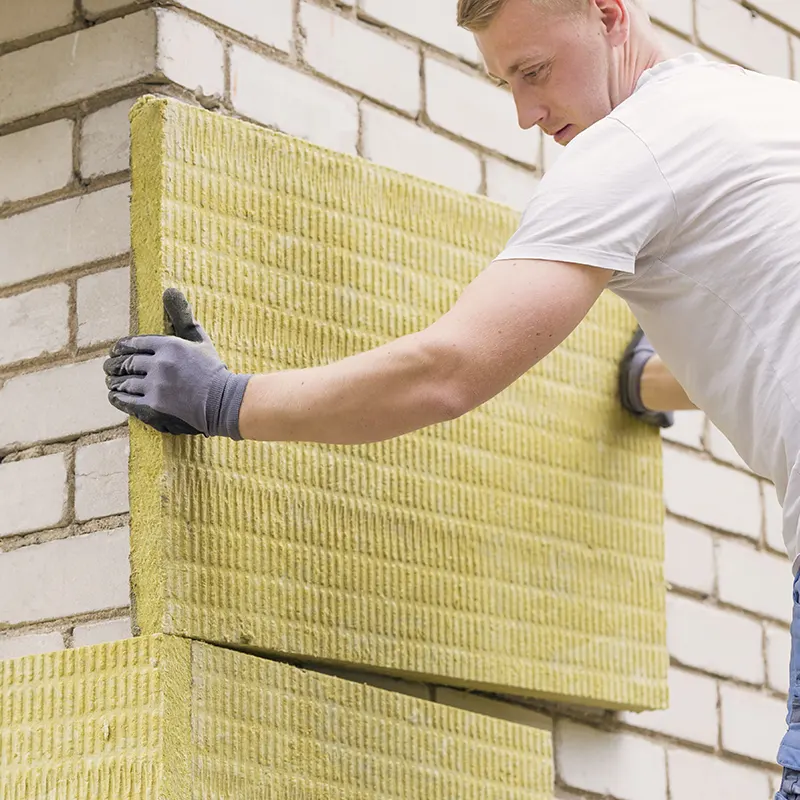
Fire ratings for insulation are dictated by regional frameworks, primarily Europe’s EN 13501-1 and North America’s ASTM standards, which classify materials based on their reaction to fire and contribution to its spread.
Key International Fire Safety Standards
In 2026, global fire safety compliance for insulation is governed by distinct regional standards. The two most influential systems are the European EN 13501-1 and the North American ASTM framework. These standards define the testing protocols and classification criteria that determine how a material is rated for fire performance.
- The European Union uses the EN 13501-1 standard as its primary classification system. It rates materials on a scale from A1 (non combustibile) down to F (highly combustible).
- North America depends on a series of ASTM standards. Key tests include ASTM E136 for non-combustibility and ASTM E84 for surface burning characteristics, which lead to a Class A (or Class 1) rating for the highest-performing materials.
Benchmark Certifications for Non-Combustible Materials
Achieving the highest fire safety classification is a critical benchmark for industrial and commercial construction. A top-tier rating like Euroclass A1 or ASTM Class A confirms that an insulation material will not contribute fuel to a fire, making it the default choice for critical infrastructure and high-occupancy buildings.
- A Euroclass A1 rating signifies a material is non-combustible and will make no contribution to fire growth or smoke production.
- An ASTM Class A rating confirms a material exhibits minimal flame spread and smoke development, satisfying strict safety codes in the United States and Canada.
Market Trends and Material Innovation
The market now prioritizes insulation that delivers excellent fire safety, high thermal performance, and practical cost-effectiveness. This demand drives development in traditional mineral-based products and new flame-retardant composites. There is a clear and growing preference for materials that are inherently non-combustible, such as mineral wools like glass wool and rock wool, or specialty products like ceramic fiber. Current innovation focuses on creating new material formulations that improve fire resistance without negatively impacting thermal efficiency or project budgets for applications from residential construction to heavy industry.
What Is Glass Wool and How It Reacts to Fire
Lana di vetro is fundamentally non-combustible due to its inorganic mineral composition, meaning it will not fuel a fire, spread flames, or release toxic smoke when exposed to high heat.
Unlike organic or foam-based insulation, glass wool’s reaction to fire is passive and predictable. It acts as a barrier rather than a fuel source, which is a critical distinction in passive fire protection systems for buildings and industrial facilities.
Composition and Non-Combustibility
Glass wool is an inorganic mineral insulation made from fine glass fibers spun from molten glass. We produce it by heating glass to around 1450°C and spinning it into a fibrous, consistenza simile alla lana. This process creates a material that is inherently non-combustible. It cannot sustain a fire or contribute fuel to a blaze because its fundamental chemistry lacks the organic compounds needed for combustion.
- The material’s inorganic nature and low calorific value are the primary reasons it cannot burn.
- It functions as a fire-safe material by design, eliminating the need for added chemical fire retardants which can introduce other safety concerns.
- Its high melting point, typically between 700–900°C, ensures it remains stable long after combustible materials have ignited.
Behavior and Safety During a Fire Event
When exposed to an active fire, glass wool’s primary safety contribution is its refusal to participate. It does not spread flames along its surface or through cavities, helping to contain a fire to its point of origin. This performance is critical for occupant safety and is validated by stringent international standards, where glass wool consistently achieves high ratings like Euroclass A1 or A2. These classifications confirm its excellent fire performance under real-world conditions.
- Does not propagate fire, slowing the growth of a blaze and providing valuable time for evacuation and response.
- Produces negligible levels of toxic smoke, which improves visibility and reduces inhalation hazards during an emergency.
- Complies with fire safety classifications used in global building codes, making it a reliable choice for specified fire-rated assemblies.
Temperature Resistance and Insulation
Glass wool provides effective thermal protection by withstanding high service temperatures. While it is non-combustible at any temperature, standard products maintain their structural and insulating integrity up to approximately 250-350°C. Even when exposed to higher temperatures, its fibrous structure continues to slow heat transfer. The matrix of fibers traps air pockets, creating a resilient barrier against both heat and direct flame, delivering the combined benefit of passive fire protection and consistent energy efficiency.
- Maintains its insulating properties in high-temperature operating conditions, preventing heat transfer through walls, tetti, and ducts.
- The trapped air within the fiber matrix is the key mechanism for blocking conductive and convective heat flow.
- It is specified across residential, commerciale, and industrial applications for both thermal control and passive fire stopping.
Custom OEM Glass Wool Insulation Solutions
ASTM and International Fire Test Standards for Glass Wool
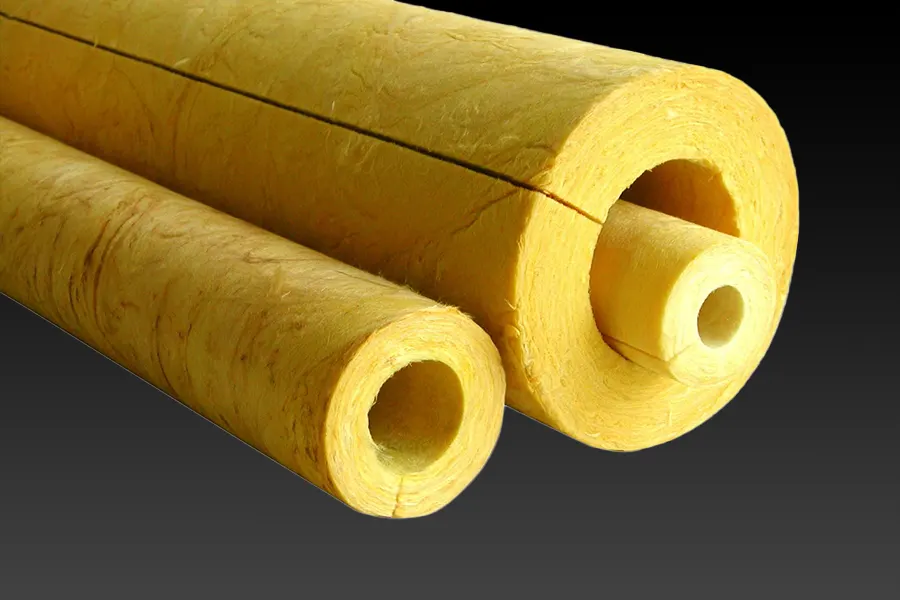
Fire test standards for glass wool operate on two distinct levels: material-level tests like ASTM E136 confirm its inherent non-combustibility, while assembly-level tests like ASTM E119 validate its role in creating fire-resistant building systems.
To ensure consistent and reliable fire safety, glass wool is subjected to a range of standardized tests that evaluate its performance under fire conditions. These standards are not uniform globally; North America and Europe often use different methodologies to arrive at their classifications. Understanding these key tests is essential for correctly specifying insulation in different regulatory environments.
Core Non-Combustibility Standards (ASTM E136 & IN 13501-1)
These standards determine the fundamental fire properties of the insulation material itself, independent of any assembly. Negli Stati Uniti, ASTM E136 is the primary test for non-combustibility. It exposes a material sample to high heat within a furnace to observe if it will ignite or contribute fuel to a fire. Since glass wool is inorganic, it easily passes this test.
The European equivalent is EN 13501-1, which provides a more detailed “Euroclass” rating. This system evaluates a material’s overall reaction to fire, including heat contribution, smoke production, and the generation of flaming droplets. Glass wool typically achieves an A1 classification, the highest possible rating, signifying it is non-combustible and makes no contribution to a fire.
| Standard | Primary Purpose | Key Performance Metric |
|---|---|---|
| ASTM E136 | Determines if a material is non-combustible. | Pass/Fail based on contribution to fire. |
| ASTM E84 | Measures flame spread and smoke density on a surface. | Indice di diffusione della fiamma (FSI) & Smoke Developed Index (SDI). |
| ASTM E119 | Evaluates the fire resistance of a complete building assembly. | Time-based rating in hours (PER ESEMPIO., 1-hr, 2-hr). |
Surface Burning Characteristics (ASTM E84)
The ASTM E84 test, also known as the Steiner Tunnel Test, measures how flames propagate across a material’s surface and the density of smoke it produces when burned. This is critical for materials used as interior finishes or where insulation might be exposed. The test yields two important metrics: the Flame Spread Index (FSI) and the Smoke Developed Index (SDI). Glass wool insulation consistently achieves very low indexes, which confirms it limits the growth of a fire and helps maintain visibility for occupants trying to evacuate.
Fire Resistance of Building Assemblies (ASTM E119)
This test shifts the focus from the insulation material itself to the performance of the entire construction assembly—such as a wall, floor, or ceiling system. ASTM E119 determines the time, measured in hours, that an assembly can contain a fire and maintain its structural integrity under a controlled fire exposure. The insulation is just one component, along with studs, gypsum board, and other structural elements. Because glass wool is non-combustible, it helps these systems achieve higher hourly fire-resistance ratings. A wall with a 1-hour or 2-hour rating acts as a passive fire barrier, compartmentalizing a building to slow or stop the spread of fire.
Glass Wool Fire Performance vs. Altri materiali isolanti
While both glass wool and rock wool are classified as A1 non-combustible, rock wool’s superior structural integrity above 1,000°C makes it the required material for high-temperature fire barriers and steel structure protection.
When evaluating insulation for fire safety, non-combustibility is the primary benchmark. Both glass wool and rock wool meet the highest standards, but their performance under extreme heat dictates their specific applications. The key differences lie not in whether they burn—neither does—but in how they maintain their physical structure when exposed to fire, which directly impacts their effectiveness as a fire barrier.
Fire Classification and Temperature Limits
Glass wool is classified as an A1 non-combustible material under the Euroclass system, which means it will not contribute to a fire. Rock wool shares this top-tier classification. The primary distinction is their operational temperature limits. Rock wool is engineered to withstand temperatures exceeding 1,000°C, while glass wool is typically rated for continuous use in applications up to 250–450°C.
- Both glass wool and rock wool share the top Euroclass A1 non-combustible rating.
- Glass wool functions effectively in temperatures from 250°C to 450°C for special-grade products.
- Rock wool demonstrates superior heat resistance, performing reliably at temperatures that exceed 1,000°C.
Structural Integrity Under Extreme Heat
The materials’ structural responses to extreme heat differ significantly. In controlled fire tests, rock wool maintains its form and density at temperatures that cause glass wool fibers to melt and degrade. This structural stability is critical for fire barrier applications where the insulation must stay in place to prevent the passage of flames and heat. Rock wool’s denser composition and unique fiber network provide this enhanced thermal stability.
| Metrica delle prestazioni | Lana di vetro | Lana di roccia |
|---|---|---|
| Classificazione del fuoco (Euroclass) | A1 (Non combustibile) | A1 (Non combustibile) |
| Temperatura massima di servizio | 250–450°C | > 1,000° C. |
| Integrity in 900°C Fire Test | Fibers melt, structure fails | Maintains form and integrity |
Application Suitability for Fire Safety
Choosing between glass wool and rock wool depends on the specific fire resistance demands of the system. Glass wool provides excellent non-combustible insulation for general-purpose applications. But for systems where fire compartmentalization and structural stability are paramount, rock wool is the necessary specification.
- Glass wool is a common choice for HVAC ducts, interior wall systems, and other cost-sensitive applications where non-combustibility is the primary requirement.
- Rock wool is specified for high-temperature industrial uses, fire barriers between building compartments, steel structure protection, and high-rise curtain walls.
- Selecting the correct material ensures compliance with stringent fire codes and improves occupant safety in demanding environments.
Fire Safety Applications of Glass Wool in Buildings and Industry
Glass wool is specified in building and industrial projects not just for its non-combustible properties but for its ability to create integrated fire-resistant assemblies that also provide critical thermal and acoustic control.
Building and Construction Sector
Glass wool is a primary material for passive fire protection in residential, commerciale, and public buildings. Engineers use it to construct fire-resistant assemblies in walls, soffitti, e pavimenti, which helps compartmentalize and slow the spread of flames and smoke during a fire. This application is critical for ensuring occupant safety and meeting stringent building codes.
- In commercial construction, it fills wall cavities and ceiling plenums to meet the fire-rating requirements common in schools, uffici, and hospitals.
- For residential homes, it serves as non-combustible insulation in attics and between stories, limiting vertical fire spread.
- Glass wool insulation wraps HVAC ductwork, preventing fire from migrating through a building’s ventilation system—a common and rapid path for fire propagation.
Industrial and Specialized Environments
In ambienti industriali ad alta temperatura, glass wool provides essential fire safety for equipment, personnel, and infrastructure. Its use is standard practice in the manufacturing, energia, and marine sectors where fire risk is a constant operational concern. The material’s ability to contain extreme heat and resist combustion makes it a reliable component in these demanding environments.
- It insulates industrial furnaces, caldaie, and process pipework to contain heat and minimize ignition hazards.
- On marine vessels and offshore platforms, crews use glass wool to build fire-resistant bulkheads and partitions that segment the vessel and contain potential fires.
- Power generation facilities and petrochemical plants rely on it for both thermal management and passive fire protection systems.
Integrated Thermal, Acustico, and Fire Protection
Glass wool’s adoption is often driven by its ability to deliver multiple performance benefits in a single product. It provides certified fire resistance while simultaneously meeting project goals for thermal efficiency and sound control. This multi-functionality makes it an efficient choice for modern projects where performance and simplified installation are key objectives.
- The material helps projects meet 2026 building energy codes by reducing heat transfer while also providing a non-combustible barrier.
- In wall and floor systems, it absorbs sound to improve room acoustics and blocks fire paths between adjacent spaces.
- Using one material for thermal, acustico, and fire performance simplifies the design, procurement, and installation process, reducing complexity and potential points of failure.
Common Misconceptions About Glass Wool and Fire Resistance
Outdated information and misinterpretation of technical terms cause persistent myths about glass wool’s composition and performance limits under heat.
Glass Wool Contains Asbestos
A persistent misunderstanding links glass wool to asbestos. Modern glass wool manufactured in 2026 is completely asbestos-free. It is produced under strict global health and safety standards that prohibit its use, a practice that has been in place for decades.
- Modern manufacturing processes for glass wool do not use asbestos and have not for many decades.
- Reputable suppliers provide material safety data sheets (Scheda di sicurezza) that explicitly confirm the absence of asbestos.
- This misconception often stems from older insulation materials used in the mid-20th century, which are entirely distinct from today’s glass wool products.
Non-Combustible Means High Temperature Proof
Many assume that a non-combustible rating, such as Euroclass A1, means the material can withstand extreme industrial temperatures. While glass wool will not burn, it has a defined service temperature limit. Exceeding this limit affects its mechanical properties, not its non-combustibility.
- The non-combustible classification means glass wool will not contribute fuel to a fire or help it spread.
- Its continuous service temperature limit is around 230°C. Above this point, the binder that holds the fibers together may degrade, compromising the insulation’s structural integrity.
- For high-temperature applications like industrial furnaces or kilns, engineers specify materials like stone wool or ceramic fiber, which are designed for those environments.
Glass Wool Poses a Radioactivity Risk
Concerns about radioactivity in glass wool are unfounded. The raw materials used in its production are naturally occurring minerals like sand and recycled glass, which do not pose a radiological hazard in the final product.
- Raw materials are tested and processed to meet stringent international safety standards before manufacturing begins.
- There is no scientific basis for claims of harmful radiation from modern, certified glass wool insulation.
- Global regulatory bodies have established safety thresholds for all building materials, and glass wool products easily meet these requirements.
How to Specify Glass Wool Correctly for Fire-Rated Systems
Correctly specifying glass wool requires moving beyond basic non-combustibility claims to verify Euroclass standards, assess thermal stability under load, and differentiate material capabilities from rock wool in high-temperature industrial applications.
Verify Non-Combustibility Standards (Euroclasse A1/A2)
To ensure compliance and safety by 2026, specifications must prioritize internationally recognized fire classification systems. The Euroclass standards, governed by EN 13501-1, have become the primary benchmark for assessing the non-combustibility of building materials in most major global markets. A product’s fire rating is not a suggestion; it is a certified performance characteristic that must be documented and verified.
Your specification documents should require manufacturers to provide current certificates proving a Euroclass A1 or A2 rating. A1 represents the highest level of non-combustibility and is the standard for critical fire-rated assemblies. Always check that the product’s fire testing data aligns with current local and international building codes, as regional requirements can vary slightly despite the convergence toward EN standards.
Assess Thermal Stability and Smoke Performance
Beyond a simple non-combustibility classification, a correct specification analyzes the material’s behavior under sustained heat. Key performance indicators include the material’s ability to maintain its structural integrity and its tendency to produce smoke, which is a critical factor for life safety during an evacuation. Look for test data confirming the glass wool maintains thermal stability at continuous temperatures above 250°C. You should also specify products with low-smoke performance classifications to ensure visibility and occupant safety during a fire event.
Specify for High-Risk Industrial or High-Rise Applications
For environments with elevated fire risk, such as industrial facilities or tall buildings, standard glass wool may require enhancement. Advanced specifications often call for composite or hybrid solutions to achieve superior fire protection. This can include evaluating hybrid fiber technologies that improve the resilience of the insulation system or incorporating intumescent coatings that expand when heated. Ensure the specified solution is engineered and tested for the unique fire loads and environmental conditions of the application, not just selected based on a generic data sheet.
Differentiate from Rock Wool for Extreme Temperatures
A common and dangerous specification error is using glass wool in applications that exceed its thermal limits. It is critical to differentiate between the capabilities of glass wool and rock wool, especially in industrial settings with process temperatures that consistently exceed 450°C. All documentation must clearly define the maximum continuous operating temperature of the system you are insulating and use precise material language—”lana di vetro” O “lana di roccia”—to prevent incorrect substitutions during procurement or installation. While both materials are non-combustible, their performance under extreme heat differs significantly.
| Metrica delle prestazioni | Lana di vetro | Lana di roccia (Lana di roccia) |
|---|---|---|
| Classificazione del fuoco (Euroclass) | A1 (Non combustibile) | A1 (Non combustibile) |
| Massimo. Continuous Service Temperature | Typically 250–350°C (up to 450°C for special grade) | Supera i 1.000°C |
| Integrità strutturale sotto tiro | Fibers can melt at high temperatures (~700°C) | Maintains structural integrity above 1,000°C |
| Focus dell'applicazione primaria | HVAC, interior walls, soffitte, general building | Forni industriali, fire barriers, steel structure protection |
Conclusione
A clear understanding of ASTM and international standards ensures that the material contributes effectively to the overall fire resistance of an assembly. This verification process is fundamental to protecting property and ensuring occupant safety.
If you need certified technical data sheets for your next project review, our team can provide the necessary documentation. Contact us to request a full catalog of our fire-rated glass wool insulation products.
Domande frequenti
What is the fire rating of glass wool?
Glass wool is inherently non-combustible and is recognized as one of the safest insulation materials. It typically achieves the highest possible fire safety classifications, such as Euroclass A1 under the European EN 13501-1 standard, which means it makes no contribution to fire. In North America, it meets ASTM E136 for non-combustibility and achieves a Class A or Class 1 rating, indicating minimal flame spread and smoke development.
What is considered fire-rated glass?
Fire-rated glass is a specialized glazing material engineered and tested to act as a barrier against the spread of flames, smoke, and in some cases, radiant heat for a specific period (PER ESEMPIO., 30, 60, 90, O 120 minuti). Unlike standard window glass, it is constructed from materials like tempered glass, ceramic glass, or multi-laminate panes with intumescent interlayers that expand when exposed to heat, forming an opaque and insulating barrier.
What is the R value of glass wool?
The R-value of glass wool insulation depends directly on its thickness and density. As a general industry benchmark, standard glass wool batts provide a thermal resistance of approximately R-3.0 to R-4.3 per inch. For practical applications, a 3.5-inch batt designed for a 2×4 wall cavity typically provides an R-13 to R-15 rating, while thicker batts for attic applications can achieve ratings of R-30, R-38, o superiore.