Os engenheiros que enfrentam temperaturas de forno acima de 1000°C sabem que distinguir entre a classificação de classificação de um material e seu limite de serviço contínuo é vital para evitar falhas no revestimento.. Mantas de fibra cerâmica oferecem uma solução leve, ainda assim, composições químicas específicas determinam sua estabilidade contra choque térmico e encolhimento.
Este guia descreve as diferenças técnicas entre mantas padrão de 1260°C e variantes estabilizadas com zircônia capazes de suportar 1430°C. Analisamos como os processos de agulhamento aumentam a resistência à tração acima 60 KPa e revisar o impacto da densidade na condutividade térmica, focando no porquê 128 kg/m³ continua sendo o equilíbrio ideal para a maioria das aplicações de alta temperatura.
O que é uma manta de fibra cerâmica?
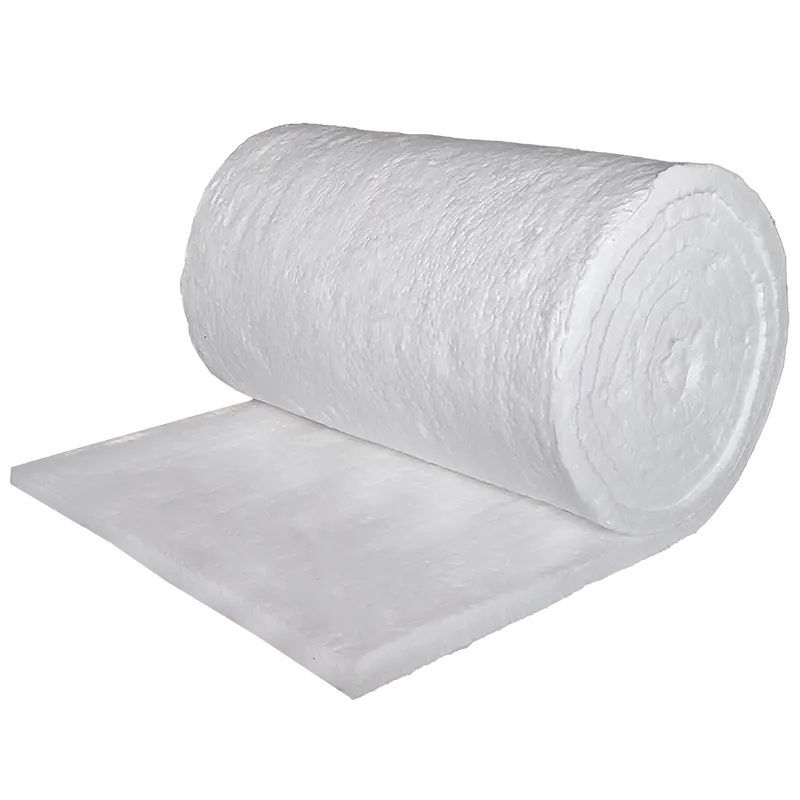
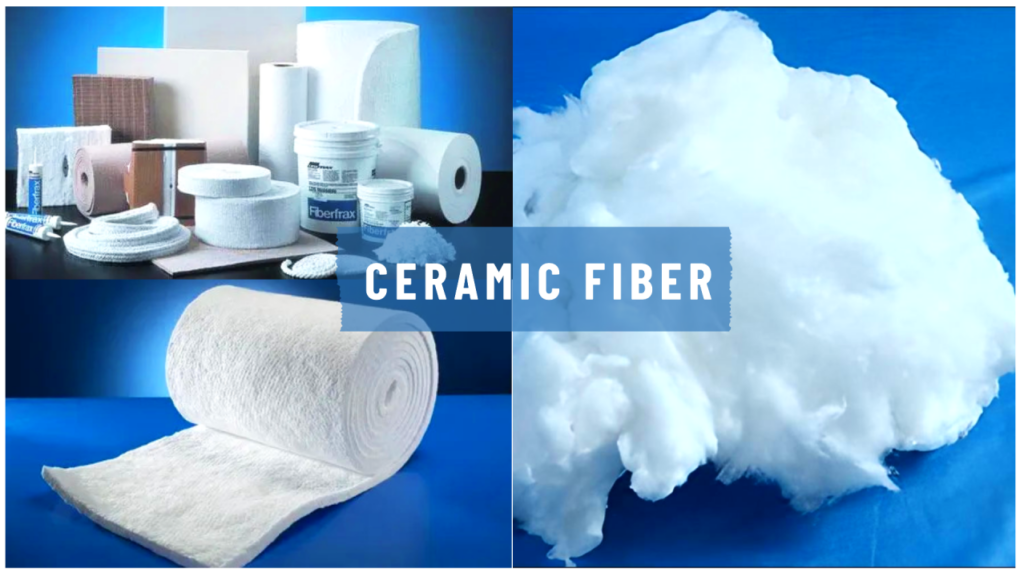
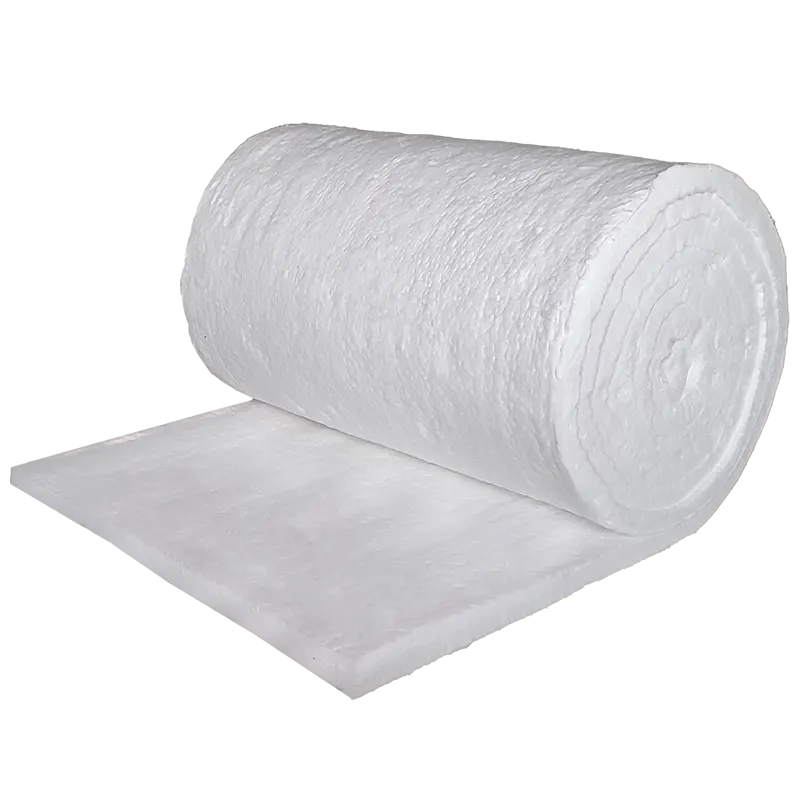
Uma manta de fibra cerâmica é leve, material de isolamento refratário de alta temperatura composto de fibras fiadas de alumina-sílica. Fabricado através de um processo de agulhamento mecânico que elimina a necessidade de ligantes orgânicos, suporta temperaturas entre 1260°C (2300°F) e 1430°C (2600°F) mantendo baixa condutividade térmica e flexibilidade.
Composição e Estrutura de Fabricação Agulhada
Engenheiros fabricam mantas de fibra cerâmica a partir de fibras de alumina-sílica de alta pureza, normalmente contendo 47–52% de Al₂O₃. Estas matérias-primas são derretidas e fiadas em longos, filamentos flexíveis que formam a matriz base do isolamento. Ao contrário dos refratários rígidos, esta estrutura fibrosa retém quantidades significativas de ar estático, fornecendo valores de isolamento até cinco vezes superiores aos tradicionais tijolos refratários ou concretos.
A integridade estrutural da manta vem de uma dupla face “agulhamento” processo. Este método mecânico interliga as fibras em um padrão cruzado, garantindo alta resistência à tração (≥60 KPa) sem o uso de ligantes orgânicos. A ausência de aglutinantes evita a liberação de fumaça ou vapores durante o aquecimento inicial e garante que o material retenha suas propriedades físicas mesmo em ambientes com corrosão por óleo. Esta construção permite que o material resista eficazmente ao choque térmico e ao ataque químico.
Classificações de temperatura e especificações físicas
Os usuários industriais categorizam essas mantas com base na temperatura máxima de serviço. As classificações mais comuns são Grau Padrão, classificado para 1260°C (2300°F), e grau de zircônia, classificado para 1430°C (2600°F). As variantes de Zircônia incluem aproximadamente 15% ZrO₂ para estabilizar as fibras em temperaturas extremas, evitando encolhimento excessivo e cristalização.
Principais recursos de mantas de fibra cerâmica para uso em altas temperaturas
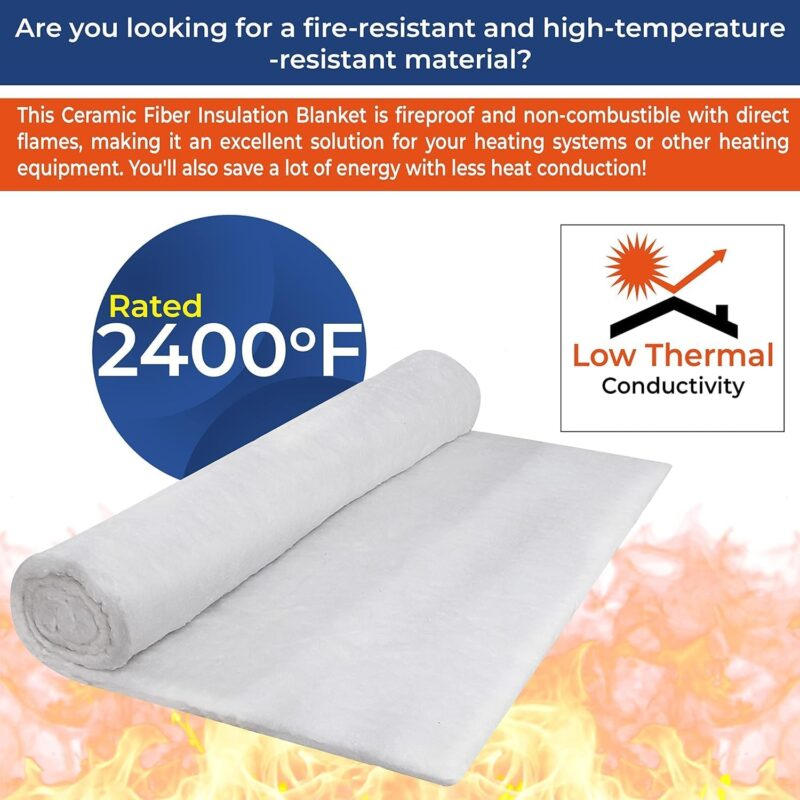
Mantas de fibra cerâmica oferecem isolamento térmico excepcional com baixa condutividade térmica (0.06–0,32 W/m·K) e resistência ao choque térmico. Eles apresentam baixo armazenamento de calor e encolhimento linear controlado, capaz de suportar temperaturas de classificação de 1260°C (Padrão) até 1600ºC (PCW) para fornos exigentes e aplicações em forno.
Estabilidade térmica e capacidades de resistência
Mantas de fibra cerâmica mantêm a eficiência do isolamento em uma ampla faixa térmica. A condutividade térmica permanece baixa, medindo aproximadamente 0.06 W/m·K a 200°C e aumentando apenas para cerca de 0.32 W/m·K a 1000°C. Esta propriedade garante perda mínima de calor mesmo durante operações sustentadas em alta temperatura. O material lida com flutuações rápidas de temperatura de forma eficaz devido à sua textura fibrosa, estrutura interligada. Esta resistência ao choque térmico evita rachaduras ou lascas quando os fornos alternam entre as fases de aquecimento e resfriamento, um requisito crítico para fornos descontínuos.
A baixa capacidade de armazenamento de calor aumenta ainda mais a eficiência energética. Ao contrário dos refratários densos que absorvem energia significativa para atingir a temperatura operacional, mantas de fibra cerâmica aquecem e esfriam rapidamente. A estabilidade química é outra característica definidora. Estas mantas resistem ao ataque da maioria dos ácidos e álcalis, embora o ácido fluorídrico e o ácido fosfórico concentrado continuem a ser exceções. Para ambientes contendo atmosferas corrosivas, Lã de alta pureza e policristalina (PCW) oferecem resistência superior em comparação com misturas padrão de alumina-sílica.
Graus de classificação e especificações físicas
Os graus de classificação de temperatura definem os limites operacionais seguros para tipos específicos de manta. As mantas de grau padrão são classificadas até 1260°C e normalmente contêm 43–44% de alumina (Al₂O₃). Graus de zircônia, que incorporam pelo menos 15% dióxido de zircônio (ZrO₂), estender esta classificação para 1425°C. Para as aplicações mais exigentes, Lã Policristalina (PCW) variantes atingem temperaturas de classificação de 1600°C com teor de alumina variando de 71% para 73%.
A estabilidade física sob calor é medida pela contração linear. As classes padrão mantêm a contração linear abaixo 2.5% a 1000°C acima 24 horas. As classes PCW oferecem controle dimensional mais rígido, com encolhimento limitado a 1.0% ou menos a 1400°C. As opções de densidade normalmente variam de 64 kg/m³ para 160 kg/m³ (4–10 pcf). Densidades mais altas se correlacionam com maior resistência mecânica e melhor resistência à erosão do fluxo de gás. Requisitos de resistência à tração, regido por padrões como ASTM C892, garantir que o material resista ao manuseio e instalação sem rasgar.
Como são fabricadas as mantas de fibra cerâmica
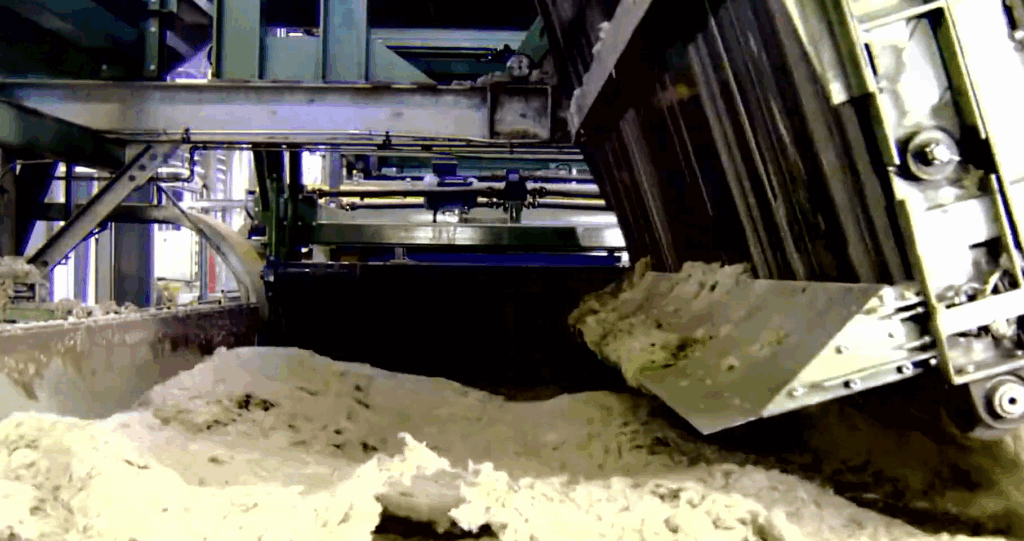
O processo de fabricação começa com a fusão de alumina e sílica de alta pureza em fornos elétricos, em seguida, girando o fundido em fibras de 1–6 µm. Essas fibras são coletadas e costuradas mecanicamente para formar uma manta sem aglutinante e com alta resistência à tração.. Finalmente, a manta passa por tratamento térmico para minimizar o encolhimento e é cortada em densidades e tamanhos específicos.
Da fusão de matérias-primas à fiação de fibras
A produção começa com a dosagem precisa de minerais brutos, principalmente alumina de alta pureza (Al₂O₃) e sílica (SiO₂). Para graus de temperatura mais alta classificados acima de 1260°C, fabricantes apresentam zircônia (ZrO₂) ou aumentar significativamente o teor de alumina para melhorar a estabilidade térmica. Esta mistura funde em fornos de resistência elétrica a temperaturas que excedem a classificação final de trabalho da fibra., garantindo um fluxo líquido homogêneo e livre de impurezas que poderiam causar cristalização precoce ou falha no serviço.
O fluxo fundido é imediatamente convertido em fibras usando fiandeiros multi-rolos de alta velocidade ou sopro de ar de alta pressão. Este estágio de fibração determina a geometria da fibra, visando um diâmetro médio entre 1 e 6 mícrons. Os controles avançados de processo limitam estritamente as partículas não fibrosadas, conhecido como “tomada,” para baixo 15% por peso. Manter o conteúdo baixo é fundamental, pois o excesso de granalha reduz o valor de isolamento do material e aumenta o peso sem adicionar integridade estrutural.
Agulhamento, Tratamento térmico, e dimensionamento
Uma vez girado, as fibras soltas assentam em uma correia transportadora em movimento para formar uma teia contínua. A indústria utiliza um processo de agulhamento mecânico de dupla face para cruzar e interligar as fibras verticalmente. Este emaranhado físico cria uma manta completamente livre de aglutinantes com resistência à tração significativa, muitas vezes excedendo 75 kPa. Ao eliminar ligantes orgânicos, a manta mantém sua estrutura física mesmo quando exposta à chama direta, evitando os problemas de fumaça e liberação de gases associados à queima do aglutinante.
A esteira agulhada então passa por um forno de ajuste térmico. Este tratamento térmico estabiliza a estrutura da fibra e pré-encolhe o material, garantindo que a contração linear permanente permaneça abaixo 2.5% para 3.0% durante o serviço em temperaturas nominais. Finalmente, a manta contínua é aparada, fenda, e enrolado em dimensões padrão. Os fabricantes controlam a taxa de alimentação e a compressão durante esta fase para atingir densidades aparentes específicas, normalmente variando de 64 kg/m³ para isolamento leve para 160 kg/m³ para revestimentos de alta durabilidade.
Soluções Premium de Isolamento em Lã de Rocha
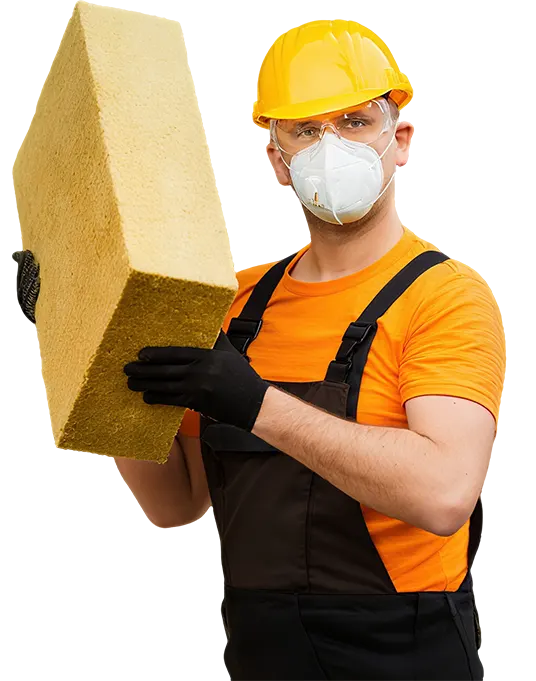
Tipos de manta de fibra cerâmica e opções de densidade
As mantas de fibra cerâmica são categorizadas principalmente por classificação de temperatura, variando de Padrão (1260°C) para graus de alta pureza e zircônia (até 1600ºC). As opções de densidade normalmente variam de 96 kg/m³ para 160 kg/m³, onde maior densidade (por exemplo, 128 kg/m³) oferece resistência térmica superior (0.09 W/m·k a 400°C) ao custo do aumento de peso. A seleção depende do equilíbrio entre as necessidades de contenção de calor e os limites de carga estrutural.
| Classificação de notas | Classificação de temperatura máxima | Perfil de composição | Aplicação Típica |
|---|---|---|---|
| Grau Padrão | 1260°C (2300°F) | Alumina-Sílica (Al₂O₃ ≈ 44%) | Revestimentos gerais para fornos & isolamento de reserva |
| Grau de alta pureza | 1260°C – 1350°C | Alta alumina (≥45-52%) | Estabilidade química em ambientes agressivos |
| Grau de Zircônia | 1430°C (2600°F) | Al₂O₃-SiO₂ + 15-17% ZrO₂ | Zonas industriais de alto calor & ciclismo rápido |
| Policristalino (PCW) | 1600°C (2912°F) | Alta alumina (>70%) | Calor extremo & resistência ao ataque químico |
Classificação por Grau de Temperatura e Composição
O mercado industrial classifica mantas de fibra cerâmica em graus distintos definidos pela pureza química e resistência térmica dos tetos. Cobertores de grau padrão, classificado para 1260°C, utilizar uma mistura de aproximadamente 45–46% de alumina e sílica. Eles são projetados para aplicações gerais, como revestimentos de fornos e fornos de recozimento, onde as temperaturas de operação contínua permanecem abaixo de 1050°C.. Para ambientes que exigem maior estabilidade química, Variantes de alta pureza aumentam o teor de alumina (≥43-52%) e reduzir impurezas como óxido de ferro e álcalis, evitando a degradação do material em atmosferas agressivas.
Aplicações que excedem 1300°C necessitam de composições de materiais avançadas para mitigar o encolhimento e a cristalização das fibras. Mantas de grau de zircônia incorporam 15–17% de dióxido de zircônio (ZrO2) na matriz de alumina-sílica, aumentando a temperatura de classificação para 1430°C. Esta adição estabiliza a estrutura da fibra contra o calor extremo, garantindo encolhimento mínimo. No topo do espectro de desempenho, Lã Policristalina (PCW) variantes operam até 1600°C, aproveitando o alto teor de alumina (>70%) para resistir aos mais severos ciclos térmicos e ataques químicos encontrados na metalurgia especializada.
Cobertores de fibra cerâmica vs.. Outros materiais de isolamento de alta temperatura
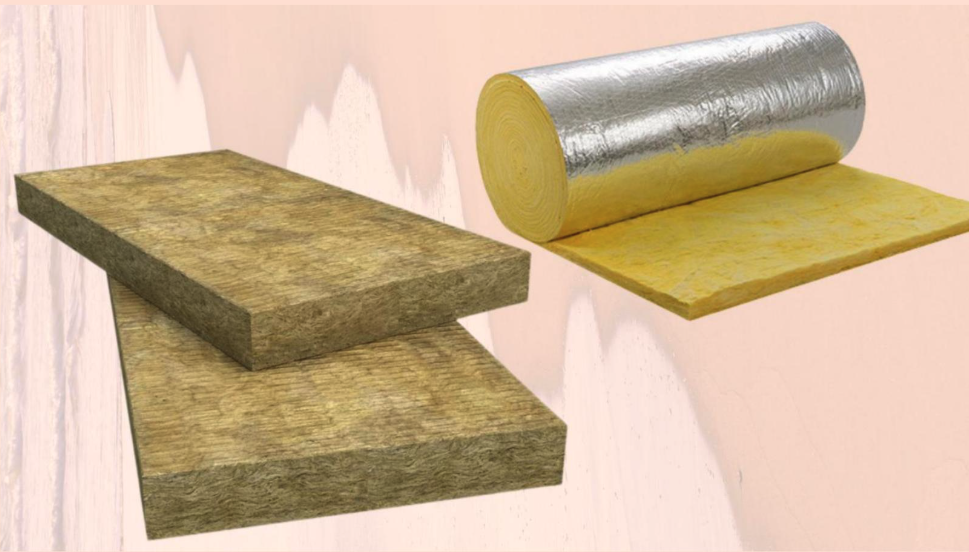
As mantas de fibra cerâmica superam a lã de vidro e lã de rocha em ambientes superiores a 1000°C, oferecendo classificações de serviço de 1260°C a 1600°C em comparação com os limites de 600°C a 1000°C da lã mineral. Embora significativamente mais leve (96–128 kg/m³) do que tijolos refratários densos (~3500 kg/m³), eles fornecem condutividade térmica superior (0.15 W/m·K a 600°C) e estabilidade química, tornando-os o padrão para revestimentos de fornos industriais de alta temperatura.
| Material de isolamento | Temperatura máxima de serviço | Aplicação Típica |
|---|---|---|
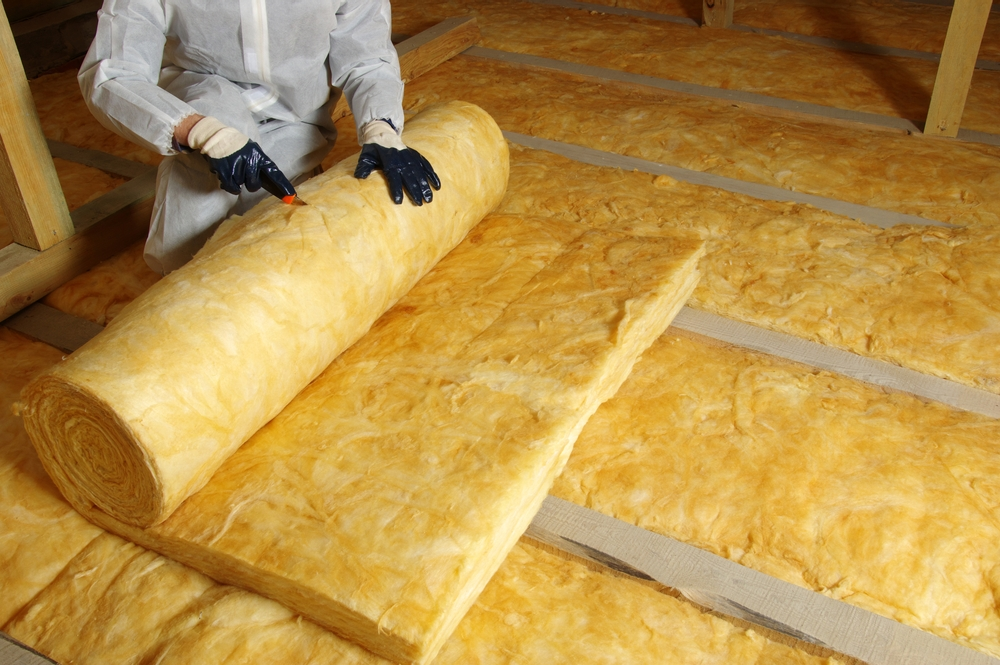
| Lã de vidro / Fibra de vidro | ~600°C (1100°F) | AVAC, tubulação de baixo calor, caldeiras comerciais |
| Lã de pedra (Mineral) | ~1000°C (1832°F) | Fornos industriais, proteção contra incêndio, insonorização |
| Manta de fibra cerâmica | 1260°C–1600°C | Revestimentos de forno, fornos, backup de metal fundido |
| Tijolo refratário denso | >1600°C+ | Estruturas portantes, linhas de fluxo de tanque de vidro |
Comparação com Lã Mineral e Fibra de Vidro: Limites de temperatura
A principal distinção entre fibra cerâmica e lã mineral reside nos seus pontos de decomposição térmica.. Lã de vidro e têxteis de fibra de vidro padrão, como Tempmat, operar efetivamente até 600°C–650°C (1200°F). Além deste limite, os ligantes em fibra de vidro degradam-se rapidamente, e as próprias fibras podem amolecer ou desvitrificar sob estresse térmico. A lã de rocha amplia ligeiramente esta faixa, oferecendo resistência moderada até aproximadamente 1000°C, no entanto, muitas vezes carece da integridade estrutural necessária para o impacto direto da chama ou para o aquecimento cíclico encontrado em fornos metalúrgicos..
As mantas de fibra cerâmica são projetadas especificamente para cobrir a faixa de 1050°C a 1600°C, onde as lãs minerais falham. Os graus padrão de aluminossilicato são classificados para uso contínuo a 1260°C, enquanto as variantes com alto teor de alumina e zircônia suportam até 1430°C. Adicionalmente, enquanto os tapetes de fibra de vidro são frequentemente limitados a 1 polegada de espessura devido a restrições de fabricação, mantas de fibra cerâmica são produzidas em espessuras de até 2 polegadas (50milímetros), fornecendo isolamento superior de camada única para contenção de alto calor.
Aplicações industriais comuns de mantas de fibra cerâmica
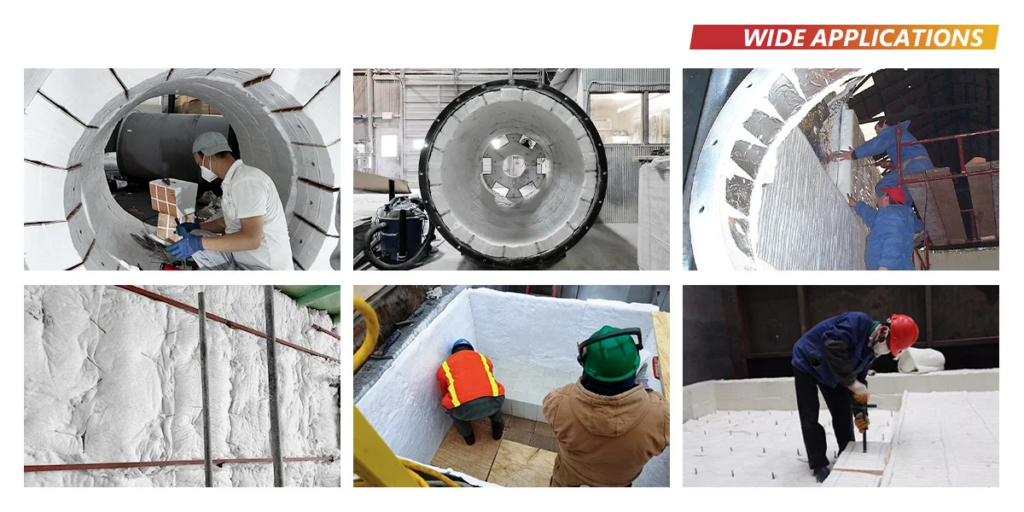
Mantas de fibra cerâmica são usadas principalmente como revestimentos térmicos para fornos, fornos, e caldeiras em aço, vidro, e indústrias petroquímicas, lidar com temperaturas entre 1050°C e 1450°C. Além da contenção de calor, eles desempenham funções críticas na proteção passiva contra incêndio, envolvimento de tubos, e vedação de juntas de expansão para instalações de geração de energia e processamento químico.
Revestimentos Refratários e Fornos Industriais Pesados
Equipamentos de processamento de alta temperatura dependem de mantas de fibra cerâmica para retenção crítica de calor e eficiência energética. Em fornos industriais, reformadores a vapor, e caldeiras, essas mantas funcionam como revestimento de face quente exposta diretamente ao calor ou como isolamento de backup atrás de tijolos refratários. Cobertores de densidade padrão (128 kg/m³) representam a norma da indústria para essas aplicações, proporcionando integridade estrutural sem adicionar peso excessivo à carcaça do forno.
O aço, vidro, e os setores de processamento químico utilizam fibras de aluminossilicato para suportar temperaturas operacionais contínuas que variam de 1.050°C a 1.450°C. Baixa condutividade térmica – aproximadamente 0.21 W/m·K a 816°C – garante que as temperaturas do processo permaneçam estáveis enquanto o consumo de combustível diminui. Para ambientes agressivos contendo ácidos ou álcalis, operadores especificam lã policristalina (PCW) cobertores, que mantêm a estabilidade até 1600°C (2912°F) e resistem melhor ao ataque químico do que as formulações padrão.
Proteção Contra Incêndios e Gestão Térmica Especializada
Além dos revestimentos de forno padrão, mantas de fibra cerâmica atuam como barreiras de segurança essenciais em sistemas passivos de proteção contra incêndio. Classes específicas atendem à UL 723 padrões para características de queima de superfície, tornando-os adequados para corta-fogo em montagens de edifícios e recintos industriais. No setor de geração de energia, esses materiais isolam turbinas, reatores térmicos, e geradores nucleares, protegendo componentes externos e pessoal contra calor interno extremo.
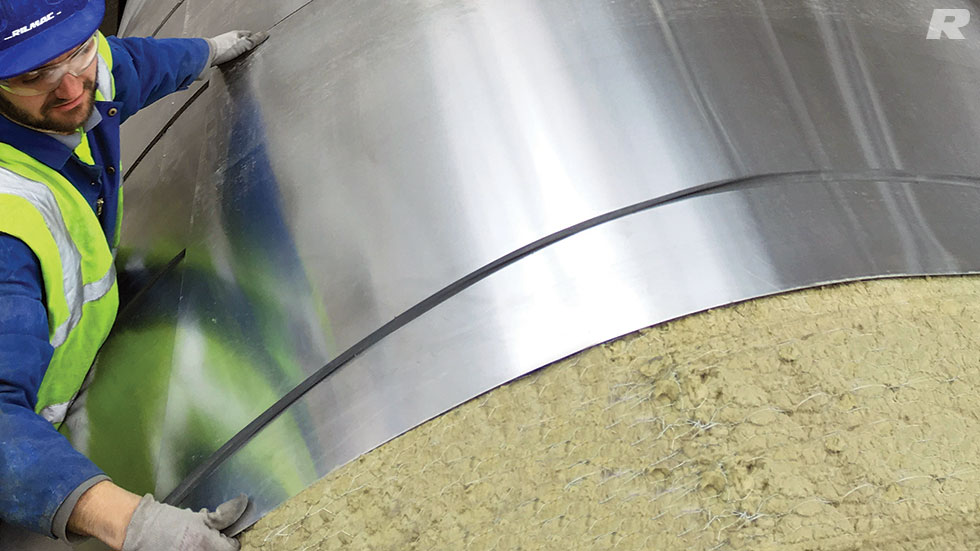
A flexibilidade do material permite que as equipes de manutenção envolvam tubos de alta temperatura e fabriquem juntas ou juntas de expansão para equipamentos de fundição de metal. Esta adaptabilidade é particularmente útil para operações de reparação e modernização, onde os técnicos usam cobertores - disponíveis em rolos até 7.2 metros de comprimento – para remendar rapidamente o isolamento degradado ou cobrir tijolos refratários danificados, minimizando o tempo de inatividade durante interrupções não planejadas.
Como escolher a manta de fibra cerâmica certa para o seu projeto
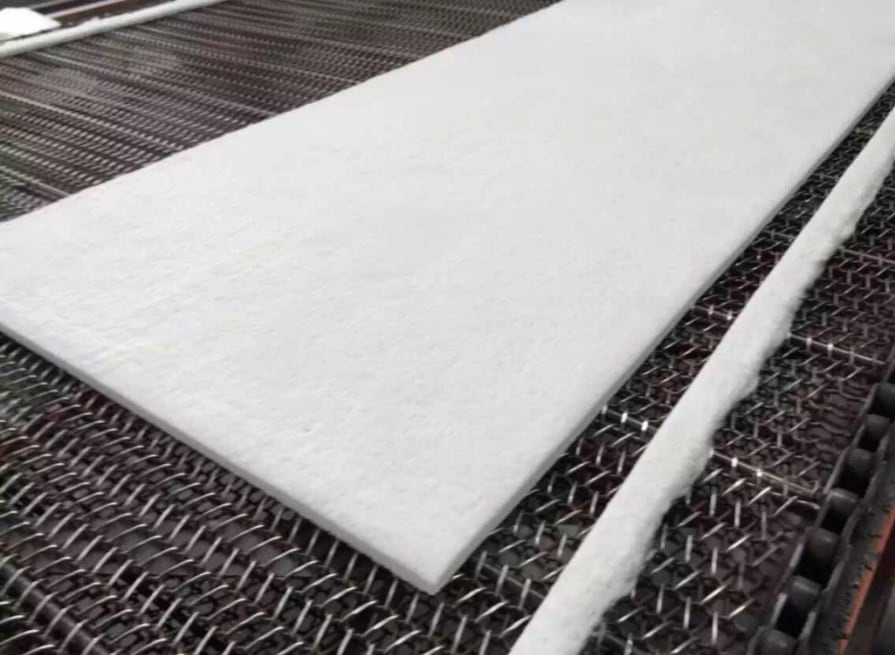
A seleção começa combinando a temperatura operacional contínua com o grau correto (Padrão 1100°C, Alta Pureza 1260°C, ou Zircônia 1430°C). Os engenheiros devem então determinar a densidade ideal (normalmente 96–128 kg/m³ para revestimentos de fornos) e calcular a espessura necessária para atender às metas de resistência térmica e, ao mesmo tempo, garantir a compatibilidade química com gases de processo.
| Grau de manta | Classificação de temperatura | Limite de uso recomendado | Característica Química Chave |
|---|---|---|---|
| Padrão (ST) | 1260°C (2300°F) | 1050°C (1922°F) | Al₂O₃ ≥ 43–44% |
| Alta Pureza (HP) | 1260°C (2300°F) | 1100°C (2012°F) | Baixo teor de ferro/álcalis |
| Zircônia (Hz) | 1430°C (2600°F) | 1350°C (2462°F) | ZrO₂ ≥ 15% (Estabilizador) |
| Policristalino (PCW) | 1600°C (2912°F) | 1500°C (2732°F) | Al₂O₃ 72% + SiO₂ 28% |
Selecionando o grau de temperatura ideal e a composição química
Os engenheiros devem distinguir entre a temperatura de classificação e a temperatura de trabalho contínuo ao especificar materiais. A temperatura de classificação representa o limite extremo onde a contração do material atinge um limite padrão (normalmente 3–4% acima 24 horas), não é a temperatura segura para operação a longo prazo. Para serviço contínuo, selecione um grau pelo menos 150°C acima do ambiente esperado do forno. Padrão (ST) graus suficientes para isolamento de backup geral até 1050°C, enquanto Alta Pureza (HP) oferecem melhor estabilidade para revestimentos diretos de fornos até 1100°C devido à redução de impurezas de ferro e álcalis.
Determinando a Densidade, Grossura, e requisitos de camadas
A densidade impacta diretamente a resistência mecânica e a condutividade térmica. Para revestimentos de fornos expostos onde ocorrem altas velocidades de gás ou vibrações mecânicas, especifique uma densidade de 128 kg/m³ (8 libras/pés³) ou superior. Esta densidade evita a erosão da fibra e minimiza o encolhimento linear. Por outro lado, camadas de backup protegidas por refratários rígidos operam efetivamente com densidades mais baixas, como 64 kg/m³ ou 96 kg/m³, reduzindo o peso e o custo geral do material sem comprometer a eficiência térmica do sistema.
Opções de OEM e personalização para mantas de fibra cerâmica
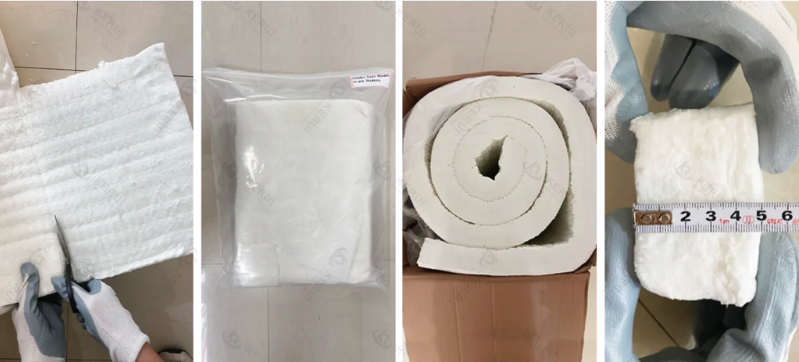
Os serviços OEM permitem que os fabricantes personalizem mantas de fibra cerâmica por grau de temperatura (Padrão 1260°C versus. Zircônia 1430°C), densidade (64–128 kg/m³), e dimensões físicas, incluindo tiras e formas personalizadas. Os fornecedores também apoiam a rotulagem privada, embalagem personalizada, e formulações especializadas como biossolúvel ou lã úmida para necessidades de aplicação específicas.
Especificações de alfaiataria: Dimensões, Densidade, e graus de temperatura
Os engenheiros podem especificar mantas de fibra cerâmica com base em requisitos térmicos e físicos precisos, em vez de depender apenas de estoques prontos para uso.. A personalização de temperatura normalmente distingue entre classes comerciais padrão (aproximadamente 1260°C / 2300°F) e classes estabilizadas com zircônia (1430°C / 2600°F). As variantes de Zircônia introduzem ZrO₂ na matriz de alumina-sílica, reduzindo significativamente o encolhimento linear e mantendo a integridade estrutural em ambientes de calor extremo onde as mantas padrão podem degradar ou fragilizar.
Marca, Embalagem, e integração da cadeia de suprimentos
Para distribuidores e fabricantes de equipamentos de grande porte, Os serviços OEM suportam rotulagem privada completa. Isso inclui logotipos impressos personalizados em caixas, bolsas, e documentação técnica, garantindo a consistência da marca em toda a linha de produtos. Os fabricantes também podem adaptar as embalagens para eficiência logística, oferecendo paletes de madeira reforçadas, embalagem resistente às intempéries, ou rolos de unidades de medida específicas para agilizar as operações de armazém.
Considerações Finais
As mantas de fibra cerâmica mudam fundamentalmente a forma como as indústrias pesadas gerenciam a energia térmica, reduzindo as cargas estruturais e melhorando a eficiência do isolamento. Para empresas que compram em volume de fibra cerâmica, trabalhando com confiança fornecedores de fibra cerâmica garante qualidade consistente, fornecimento estável, e desempenho de longo prazo em ambientes de alta temperatura.
Selecionar o grau e a densidade corretos da fibra é essencial para durabilidade e economia de energia. Se você está procurando confiança fornecedores de fibra cerâmica para soluções padrão ou personalizadas, visita https://chinathermalinsulation.com/ para explorar nossos produtos ou solicitar um orçamento personalizado hoje.