コンテンツにスキップします

The debate over ceramic fiber vs mineral wool is a critical decision point for any high-temperature operation, directly influencing equipment longevity, energy costs, and plant safety. Choosing the wrong material for a furnace, 窯, or exhaust system doesn’t just reduce efficiency; it creates a significant risk of insulation failure, unplanned downtime, and hazardous thermal events.
This technical comparison provides a clear operational guide. We’ll analyze each material’s composition, maximum service temperature, and thermal performance under realistic industrial conditions. You’ll get a direct breakdown of fire behavior, 機械的強度, and ideal applications to help you specify the correct insulation for your process with confidence.
What Is Ceramic Fiber and Where It Excels
Ceramic fiber is an engineered insulation material designed for extreme-heat industrial applications, offering superior thermal stability and low thermal conductivity in environments exceeding 1,000°C.
Defining Ceramic Fiber: Composition and Properties
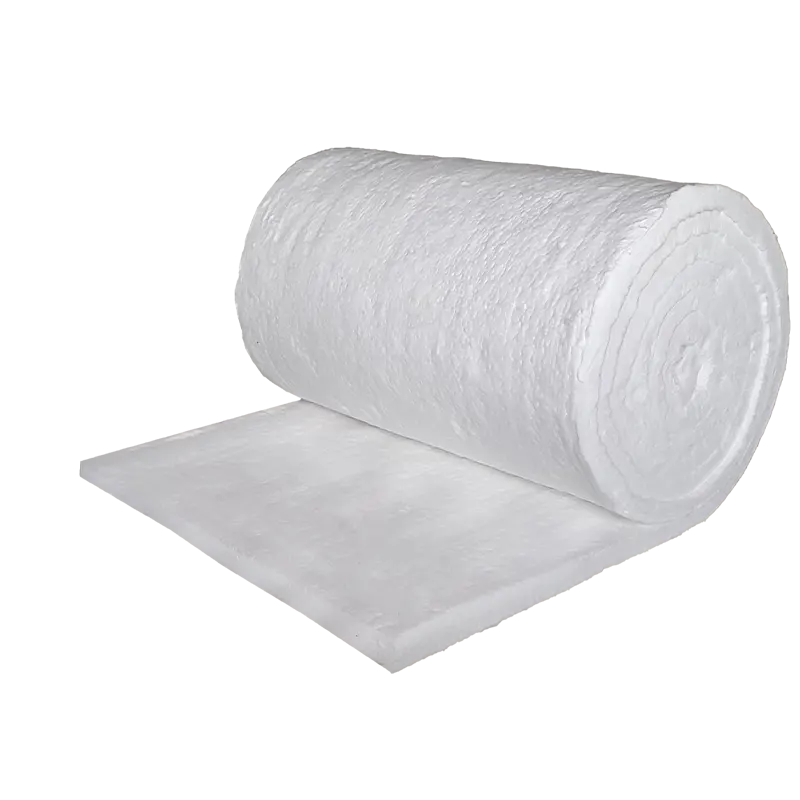
Ceramic fiber is a high-performance insulation material engineered for extreme heat environments. It is manufactured from high-purity alumina and silicate raw materials, which are melted and spun into fine fibers. This composition gives it low thermal conductivity, making it highly effective at preventing heat transfer even at very high temperatures.
- Provides exceptional temperature stability, with specialized grades rated for service up to 1,600°C (2912°F).
- Features a lightweight and flexible fiber structure, which simplifies installation around complex geometries.
- Modern manufacturing focuses on material safety protocols to mitigate risks associated with fine particle inhalation during handling.
Performance in High-Temperature Industrial Settings
The primary advantage of ceramic fiber is its consistent performance in environments where other insulation materials would degrade or fail. It excels in applications requiring continuous resistance to temperatures above 1,000°C, making it the default choice for lining high-temperature process equipment.
- Maintains its structural integrity during rapid temperature changes, showing excellent thermal shock resistance.
- Improves the energy efficiency of furnaces and kilns with its low heat storage capacity, allowing for faster heat-up and cool-down cycles.
- Delivers significantly lower thermal conductivity than mineral wool at extreme temperatures, making it a more effective insulator in high-heat processes.
Key Applications in Advanced Manufacturing
Ceramic fiber is the material of choice for specialized industries that depend on precise thermal management for safety, process efficiency, and final product quality. Its use is common in high-value manufacturing and process industries where temperature control is non-negotiable.
- Serves as primary hot-face lining for industrial furnaces, 窯, とボイラー, particularly in the petrochemical, steel, and metallurgy sectors.
- Functions as essential thermal insulation in aerospace, automotive, and power generation equipment where heat management is critical.
- Fills applications where a lightweight, high-performance insulator is required to meet strict design and weight specifications.
What Is Mineral Wool and Its Temperature Capabilities
Mineral wool is an inorganic insulation engineered from natural rock or industrial slag, delivering robust thermal performance and non-combustible fire resistance in mid-range temperature applications.
Material Composition and Manufacturing
Mineral wool is a non-combustible insulation material composed of inorganic fibers spun from molten stone, ロック, or blast furnace slag. Its composition is approximately 98% inorganic material. The remaining 2% consists of a thermosetting resin binder which holds the fibers together and a small amount of oil to suppress dust.
- Made from natural or synthetic raw materials like stone or industrial slag.
- Fibers are spun into a dense, wool-like structure during production.
- A small amount of resin binder holds the fibers together to create the final product form.
Operating Temperature and Fire Resistance
Mineral wool is engineered for high-temperature applications, with a continuous operating limit up to 1200°F (approximately 650°C). The fibers have a much higher melting point, exceeding 1900°F (1037℃), which provides excellent fire resistance and structural stability in industrial settings. Stone wool variants can withstand fire temperatures exceeding 1000°C, making them a reliable choice for fire-stopping applications.
- Rated for continuous use at temperatures up to 1200°F (650℃).
- The fiber melting point exceeds 1900°F, ensuring structural stability during a fire.
- Stone wool variants are specified for fire exposure above 1000°C, while glass wool typically melts around 600°C.
Thermal Performance and Conductivity
Mineral wool provides effective thermal insulation by trapping air within its dense, 繊維構造. Its thermal conductivity is low at ambient temperatures, 通常は~の範囲です 0.030 に 0.046 w/(M・k). This dense and porous structure also gives it strong acoustic insulation properties, making it useful for noise reduction in industrial and commercial environments. The material’s insulation performance (R値) improves as the temperature decreases.
- Exhibits a thermal conductivity of 0.030–0.046 W/(M・k) at room temperature.
- The material’s R-value increases in colder conditions.
- Offers strong acoustic insulation properties due to its dense, porous structure.
Application Guidelines by Temperature
The required thickness of mineral wool insulation directly depends on the operating temperature of the application. For lower-temperature process piping or vessels, thinner layers are sufficient. As operating temperatures increase, greater thickness is necessary to maintain surface temperature control and ensure effective heat containment. When temperatures exceed 800°F (427℃), a higher-performance material like a ceramic fiber blanket may offer better thermal efficiency.
- A 1-inch thickness is generally suitable for temperatures around 200°F.
- For temperatures between 400°F and 600°F, a 3-inch thickness is a common recommendation.
- In environments exceeding 800°F, materials with lower thermal conductivity, such as ceramic fiber, become more efficient.
Boost Furnace Efficiency with Custom Insulation
Quick Comparison Overview: Ceramic Fiber vs Mineral Wool
Ceramic fiber is engineered for extreme-heat industrial processes above 1000°C, while mineral wool provides a cost-effective, robust solution for mid-temperature construction and mechanical insulation below 800°C.
Ceramic Fiber vs Mineral Wool in Composition and Manufacturing
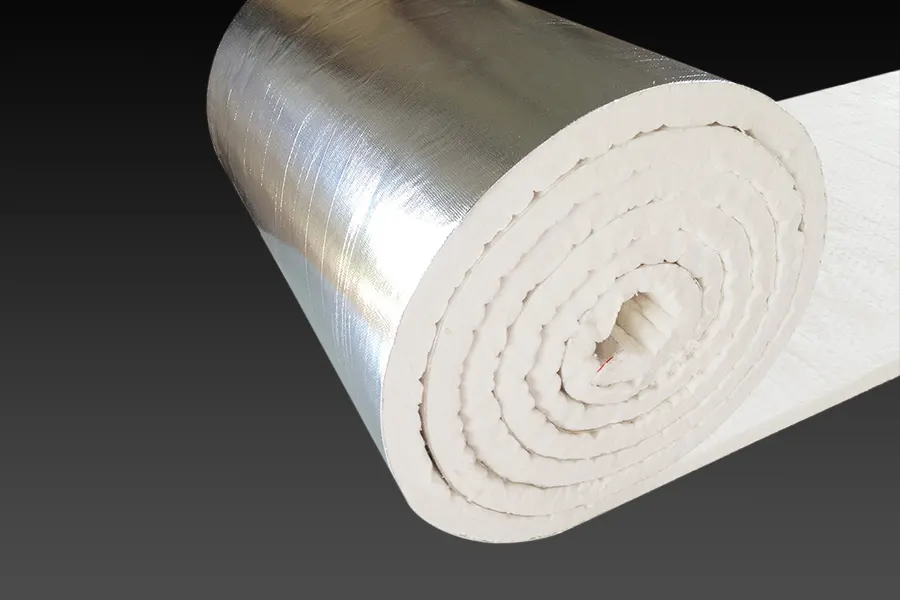
The fundamental differences between these materials begin with their raw ingredients and production. Ceramic fiber is manufactured from high-purity alumina and silicate materials, such as kaolin and silica powder, which are melted in electric furnaces. This process creates a fine, 白, lightweight fiber with very low slag content, engineered specifically for extreme heat applications.
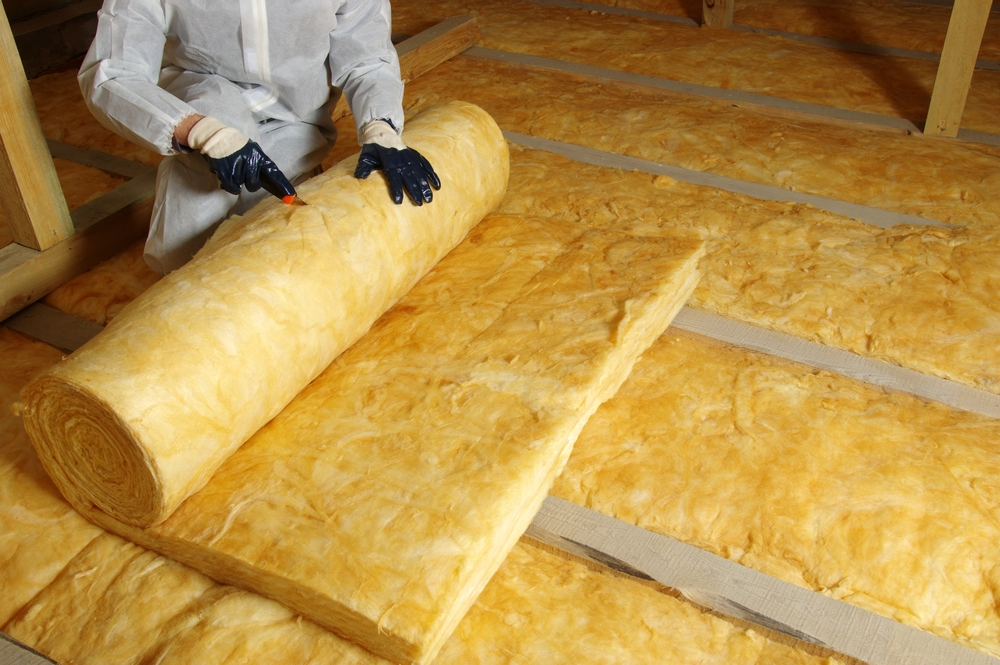
Mineral wool is made from molten rock or industrial slag. This results in a denser, typically yellow-colored material with a higher slag content. These manufacturing differences directly define their performance characteristics. Ceramic fiber’s composition gives it lower thermal conductivity and a much higher working temperature range (1000°C–1800°C) compared to mineral wool (600°C–1200°C).
Ceramic Fiber vs Mineral Wool in Maximum Service Temperature
Heat tolerance is the most critical distinction between ceramic fiber and mineral wool. Ceramic fiber products are designed for severe industrial environments, with maximum service temperatures ranging from 1,050°C to 1,430°C depending on the specific grade. For long-term structural integrity, its continuous use temperature is typically set 150-200°C below this maximum rating.
Mineral wool cannot compete at these levels. It is limited to mid-temperature applications and is entirely unsuitable for equipment like industrial furnaces, 窯, or reactors where ceramic fiber is the standard.
| パフォーマンス指標 | セラミック繊維 | ミネラルウール |
|---|---|---|
| 最高使用温度 | 1050°C – 1430°C (up to 1600°C for special grades) | ~650°C – 800°C |
| 熱伝導率 | より低い (Better insulator at high temps) | Efficient at moderate temps |
| 機械的強度 | より低い, more fragile but high tensile strength at temp | より高い, more robust and easier to handle |
| 主な用途 | 工業炉, 窯, process equipment | Building insulation, 空調設備, パイプライン |
Ceramic Fiber vs Mineral Wool in Thermal Performance and Heat Resistance
In extreme heat, ceramic fiber is the more effective insulator. Its lower thermal conductivity slows heat transfer far better than mineral wool at high temperatures. While mineral wool insulates well, it can actually offer better thermal efficiency in moderate temperature ranges around 540°C (1,000°F). Ceramic fiber also has a very low thermal mass, which is a key advantage in industrial process equipment. This allows for rapid heating and cooling cycles without causing material degradation or thermal shock damage.
Ceramic Fiber vs Mineral Wool in Fire Behavior and Thermal Stability
Both materials are non-combustible, but their stability limits differ greatly. Ceramic fiber maintains its integrity and fire resistance up to 1,800°C, making it the superior choice for fire protection in furnaces, engine rooms, and high-temperature exhaust systems. Its inherent elasticity also provides excellent thermal shock resistance, preventing cracks during rapid temperature fluctuations.
Mineral wool is also an effective fire barrier but with a lower temperature limit of around 1,200°C. It serves as a reliable fire-stopping material in building and construction applications. It also performs well in environments with high moisture or vibration, where the more fragile ceramic fiber may be less suitable.
Ceramic Fiber vs Mineral Wool in Mechanical Strength and Structural Integrity
Mineral wool is tougher and more mechanically robust than ceramic fiber, making it easier to handle and install in construction settings. Its higher density and rigidity provide better strength for insulating large flat surfaces or pipes. セラミックファイバー, while more fragile, possesses high tensile strength at extreme temperatures and superior thermal shock resistance, which preserves its structure during frequent thermal cycling.
Ceramic fiber is also very lightweight, which reduces the structural load on equipment and simplifies installation in complex geometries. At their operating limits, each material faces different risks: ceramic fiber can experience linear shrinkage over time, while mineral wool is prone to binder loss and mechanical collapse if overheated.
Ceramic Fiber vs Mineral Wool in Industrial and Construction Applications
Application suitability is clearly divided by temperature and mechanical demands. Ceramic fiber is essential for high-temperature industrial processes found in the metallurgy, ガラス, および石油化学産業. Its use in furnaces, 窯, and other thermal equipment is non-negotiable where temperatures exceed 800°C.
Mineral wool is the standard for construction, 空調設備, and mid-temperature industrial insulation. It is widely applied in building walls, ducting, パイプライン, and industrial systems operating below 600°C. Cost is also a major factor. Ceramic fiber is a higher-priced, specialized material, while mineral wool offers a much more cost-effective solution for general-purpose insulation needs.
When to Choose Ceramic Fiber and When Mineral Wool Is the Better Choice
The choice between ceramic fiber and mineral wool is dictated by operating temperature; ceramic fiber is engineered for extreme industrial heat consistently above 650°C, while mineral wool is the standard for moderate-temperature and building applications.
Selecting Based on High-Temperature Industrial Needs
Ceramic fiber is the correct choice for applications that consistently exceed 650°C. It excels in extreme industrial environments like furnaces, 窯, and petrochemical equipment where superior heat resistance and thermal efficiency are primary requirements.
- Choose ceramic fiber for continuous operating temperatures between 650°C and 1,260°C.
- It is essential for industries where materials must withstand extreme thermal shock and direct flame exposure.
- Prioritize ceramic fiber when low heat storage is critical for improving energy efficiency and cycle times in industrial processes.
| 決定要因 | Choose Ceramic Fiber When… | Choose Mineral Wool When… |
|---|---|---|
| 動作温度 | The environment consistently operates above 650°C and up to 1,260°C (or higher for specialized grades). | The maximum service temperature is below 650°C. |
| 主な用途 | 工業炉, 窯, direct flame impingement zones, and high-cycle thermal processing equipment. | Building insulation, HVAC システム, commercial fireproofing, パイプの断熱材, そして音響制御. |
| 料金 & Budget | Performance is the primary driver and the budget accommodates a premium, high-efficiency material. | Cost-effectiveness is a key factor for large-scale projects where extreme temperatures are not a concern. |
| Key Technical Advantage | Superior thermal shock resistance and low heat storage for rapid heating/cooling cycles. | Excellent sound dampening, 耐湿性, and higher mechanical strength for structural applications. |
Choosing for Moderate-Temperature and Building Applications
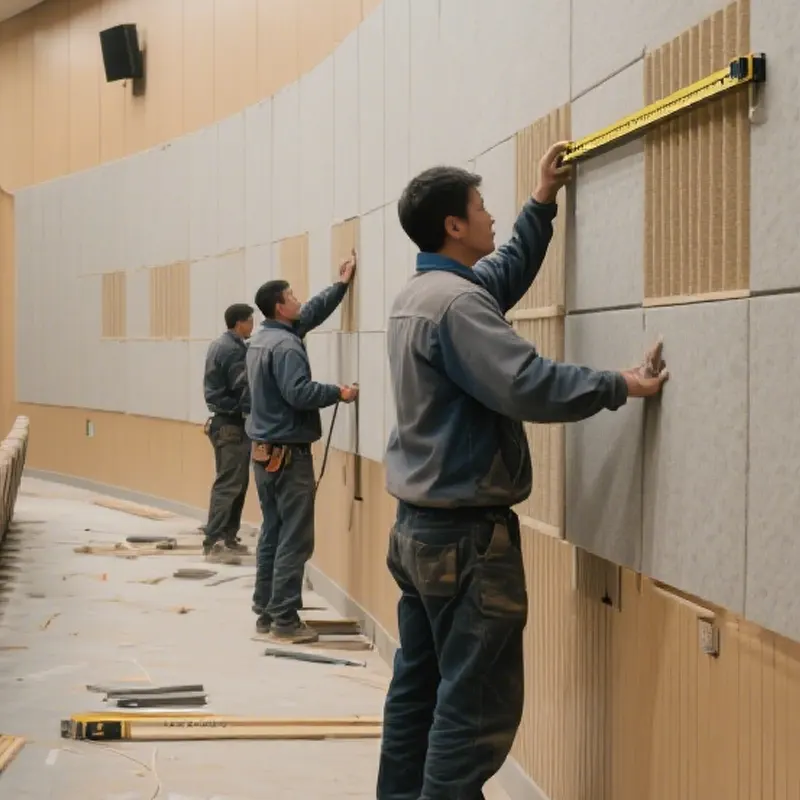
Mineral wool is the better option for thermal and acoustic insulation in applications with service temperatures below 650°C. Its performance in building insulation, HVAC システム, and general industrial equipment makes it a versatile and widely used material.
- Select mineral wool for building, 工事, and commercial insulation projects.
- It provides effective sound dampening, making it a dual-purpose solution for thermal and acoustic control.
- Ideal for insulating pipes, ボイラー, and equipment where temperatures remain within moderate ranges.
Factoring in Cost, 安全性, and Environmental Factors
The decision also rests on budget, safety protocols, and specific environmental challenges. Mineral wool often presents a more cost-effective solution for large-scale applications, while specialized ceramic fiber and treated mineral wool address specific safety and moisture-related needs.
- Mineral wool is typically the more economical choice for projects where extreme temperature resistance is not necessary.
- Consider bio-soluble ceramic fiber options in applications where worker exposure is a concern, aligning with modern safety standards.
- For offshore platforms or environments with high humidity, select mineral wool with enhanced moisture-resistant treatments.
About Chinathermalinsulation
China Thermal Insulation integrates end-to-end manufacturing with flexible OEM/ODM services, delivering tailored thermal solutions for demanding high-temperature industrial applications.
Core Manufacturing and Fabrication Expertise
China Thermal Insulation manages a complete in-house manufacturing process, from raw fiber creation to custom fabrication and global delivery. This integrated system provides consistent quality control, full material traceability, and a reliable supply chain for large-scale industrial projects. With a 40,000 m² facility, the company maintains significant monthly production capacities, including 4,000 tons of ceramic fiber products, ensuring project deadlines are met.
- The end-to-end production workflow covers raw fiber manufacturing, 熱処理, material shaping, and final quality assurance testing.
- Advanced fabrication includes precision die-cutting, CNC shaping, high-density pressing, and multilayer composite bonding for complex components.
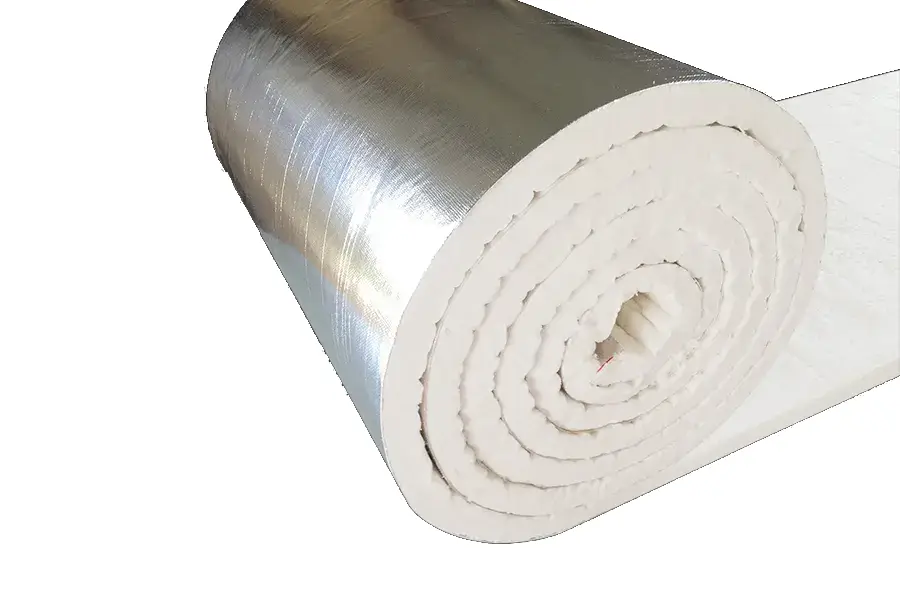
- The core material portfolio features ceramic fiber blankets, bio-soluble fiber products, 耐火ボード, and specialized thermal textiles.
Flexible Service Models for Industrial Partners
The company provides multiple service models to accommodate a full spectrum of client requirements. These models support partners from producing materials to exact client specifications to providing pre-engineered products ready for private branding, serving distributors, 請負業者, and OEM accounts.
- OEM (Original Equipment Manufacturer) services produce insulation materials based on client-defined specifications for thickness, 密度, and temperature rating.
- ODM (Original Design Manufacturer) services offer pre-engineered insulation formulas that clients can customize with their own branding for faster market entry.
- プライベートブランド options allow distributors and suppliers to brand existing, proven product lines, ensuring quick lead times and consistent performance.
Specialized Solutions for Demanding Industries
China Thermal Insulation develops tailored thermal solutions designed to meet the specific performance and regulatory needs of high-temperature industrial environments. This application-focused approach ensures that materials are optimized for their intended use, whether for thermal efficiency, 耐火性, or chemical stability.
- For industrial furnaces and kilns, the company provides ceramic fiber blankets, ボード, and modules that remain stable at continuous high temperatures.
- For the energy and petrochemical sectors, insulation is engineered for fire resistance, 熱衝撃安定性, and protection against chemical corrosion in pipelines and reactors.
- For OEM equipment manufacturers, the company supplies precision-cut and composite thermal materials for heaters, industrial ovens, and laboratory equipment.
結論
Selecting the right high-temperature insulation comes down to specific operating conditions. Ceramic fiber is the dedicated solution for extreme heat environments above 1000°C, such as industrial furnace linings. For applications below this threshold, mineral wool offers a durable and cost-effective thermal barrier with greater mechanical strength.
Review your furnace and process heating requirements to determine which material best fits your needs. Our team can help you engineer the most effective insulation system for your application.
よくある質問
Is ceramic fiber insulation better than mineral wool?
Ceramic fiber is superior for extreme high-temperature applications (above 1,000°C) due to its better thermal stability and lower thermal conductivity. しかし, mineral wool is often the better choice for lower-temperature environments where cost, 耐湿性, and acoustic insulation are more critical factors. The best material depends entirely on the specific application’s requirements.
What is the maximum temperature for ceramic fiber?
Ceramic fiber insulation is engineered for extreme heat, with a maximum continuous service temperature of up to 1,600°C (2912°F). This makes it ideal for industrial furnaces, 窯, and metallurgical applications where other materials would fail.
Is mineral wool heat resistant?
はい, mineral wool is highly heat resistant and non-combustible. It is typically rated for continuous operating temperatures up to approximately 700°C (1292°F). While it is an excellent choice for many commercial and industrial applications, it is not suitable for the extreme temperatures that ceramic fiber can withstand.
What are the disadvantages of ceramic fiber?
The primary disadvantages of ceramic fiber insulation include its higher cost compared to materials like mineral wool and significant health and safety considerations. The material can release fine, respirable particles when handled, requiring strict safety protocols and personal protective equipment (PPE) during installation and removal. It also tends to be more brittle and has lower mechanical strength than other insulators.